
Williston Property Context
Williston properties range from compact downtown buildings to highway sites with deep parking, airport-area buildings and rural parcels, so the property type sets the survey's first questions.
COMMERCIAL SYSTEM PLANNING FOR WILLISTON PROPERTIES
Williston is a small city in Levy County, part of the Gainesville metropolitan area, where US 27 and US 41 bring traffic past downtown businesses, highway retail and service sites. A city-owned municipal airport southwest of downtown and farms and acreage around the city add properties with very different layouts.
A Williston project might be a downtown office, a highway storefront, a hangar or business near the airport or a rural operation with outbuildings. Data Pro Communications plans these projects from the Ocala branch, starting with access, existing equipment and the distances the system has to cover.
Williston properties range from compact downtown buildings to highway sites with deep parking, airport-area buildings and rural parcels, so the property type sets the survey's first questions.
Coverage follows customer entry, deliveries, vehicle movement and after-hours access rather than a general view of the lot or the roadway.
Buildings separated by parking, aprons or pasture are reviewed for fiber optics, protected copper or point-to-point wireless before cameras are placed.
Data Pro Communications provides project-specific low-voltage work under FL License #EC13016138 for qualifying Williston properties, from downtown offices to airport-area and rural commercial buildings.
Many Williston businesses are reached directly from US 27 or US 41, where wide lots, headlights and changing traffic affect entrance and parking views. Downtown buildings are older and smaller, with limited ceiling space and pathways that must be found before new cable is pulled.
Relevant properties include downtown offices and shops, US 27 and US 41 highway businesses, airport-area hangars and businesses, light industrial and contractor yards, visitor-oriented businesses and rural and agricultural properties. Designs add structured cabling, access control and business Wi-Fi to video surveillance only where the property needs them.
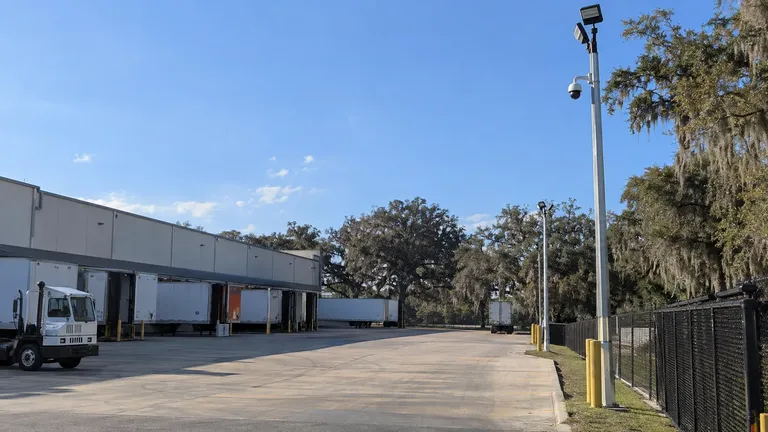
Fast vehicle approaches, signs and headlights along US 27 and US 41 make entrance and lot views harder to plan than in-town sites.
Historic and older storefronts may have limited ceiling access, plaster walls and undocumented wiring from earlier tenants.
Airport-area and yard properties have large paved or open areas where camera placement depends on poles, building walls and available power.
Many Williston businesses run with small staffs, so the system must be simple to search and export without a dedicated operator.
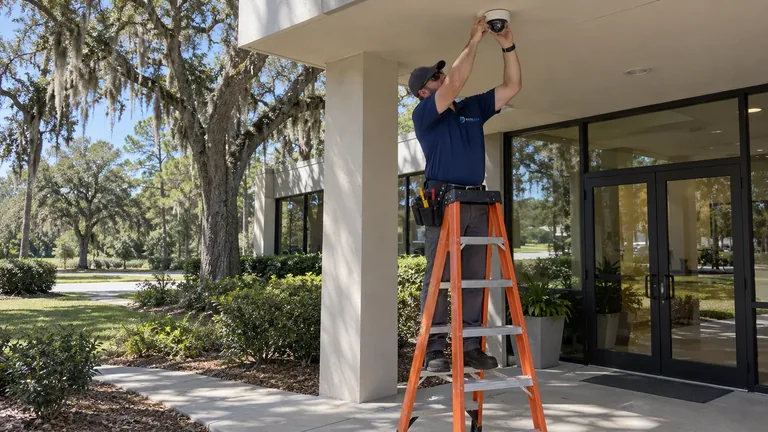
A downtown storefront, a highway entrance and a hangar door each receive a defined purpose, with lens and mounting height matched to the detail that matters there.
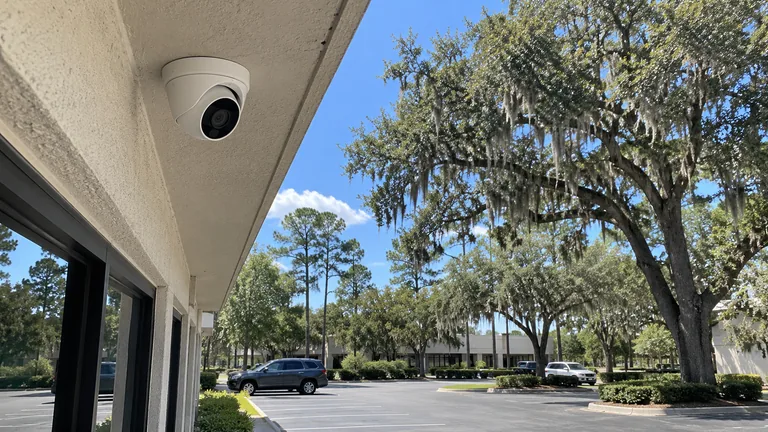
Recording is sized from camera count, business hours and how far back owners usually search, with the recorder kept in a secure, ventilated location.
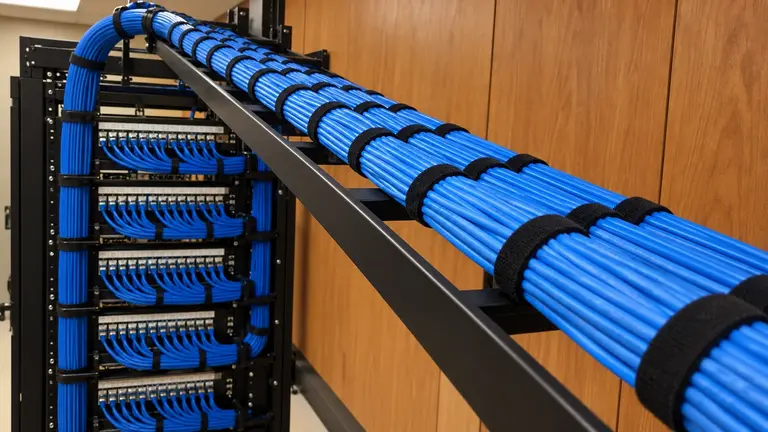
Cabling in older buildings is routed through serviceable pathways, labeled at both ends and documented to one equipment location.
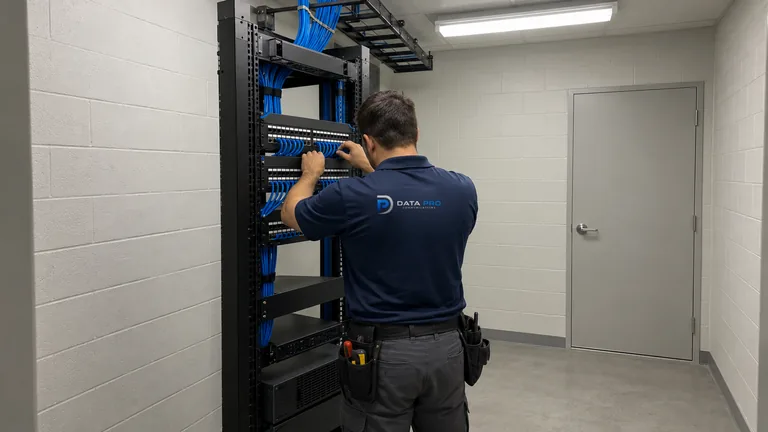
Camera traffic, PoE switching and business Wi-Fi are planned together, with the customer's network contact confirming capacity and remote-access rules.
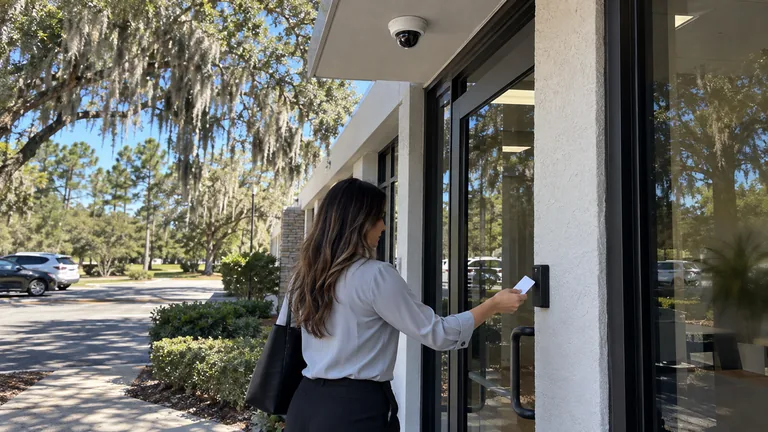
Doors, gates and hangar access can be linked to cameras when the business controls the access control system and has decided how entries are reviewed.
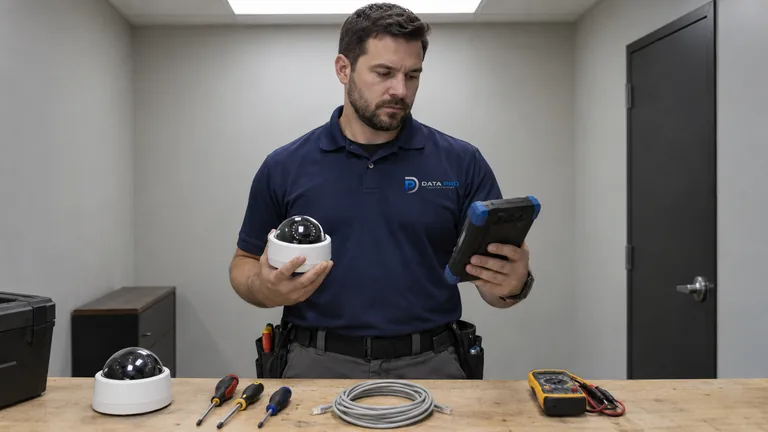
Older DVRs and analog cameras are tested for usable images and administrator access; working components can stay in a phased upgrade.
Downtown offices and shops focus on the front door, the register or reception area and the rear entrance, without reaching into neighboring storefronts.
Highway businesses receive driveway, entrance and parking views placed to limit headlight glare and keep the roadway out of frame.
Near the municipal airport, hangar doors, vehicle gates and parking areas are covered within the property's own boundaries and lease terms.
Yard gates, material storage and equipment parking are planned around vehicle movement and the protected mounting points available on site.
Businesses that serve visitors to the area's springs and outdoor attractions need entrance, parking and gear-area views planned around busy weekends.
Farms and acreage around Williston connect gates, barns and equipment buildings through measured outdoor links with power confirmed at each point.
The Williston survey follows customers and vehicles from the street to each entrance, then traces staff access, deliveries and the route to the equipment location.
Distances across parking areas, aprons and yards are measured, and each run is assigned copper, fiber optics or wireless by length and exposure.
Existing cameras, recorders and network equipment are tested in place, with ownership and administrator access confirmed before reuse.
Installation is scheduled around business hours, airport activity and busy visitor weekends, with cutovers planned to limit recording gaps.
Williston closeout confirms each approved view by day and at night, demonstrates search and export, and leaves a labeled device list and account record.
A door or gate event can bring up the matching video for an authorized user when the business controls the access control system and the link has been tested.
A video intercom at a service door or gate is configured once the business decides who answers, during which hours and who may release entry.
Recorders and switches belong in secure, ventilated spaces, with outdoor links protected against surges and weather.
Integration records list the owner, tenants and network contacts responsible for cameras, credentials and internet service.
Separate highway-facing coverage from in-building coverage: entrances on US 27 and US 41 need glare control, while interiors need short, clear views of doors and counters.
In older downtown buildings, confirm pathways and the location of existing wiring before choosing camera positions, so new cable can be installed cleanly.
Williston combines downtown storefronts, highway businesses, airport-area buildings and rural properties. A survey that starts with access and distances matches each property to the right system.
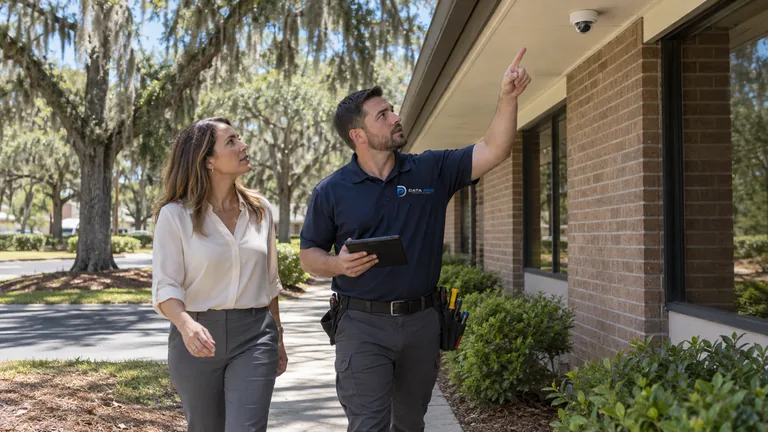
Williston camera installation turns entrance, parking and service-area priorities into fixed views with recording sized for the business.
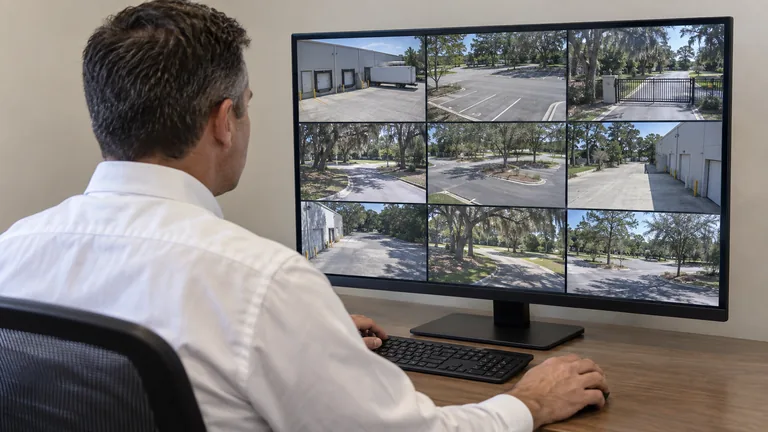
Owners and managers receive individual remote accounts, with retention set by how the business usually discovers and reviews incidents.
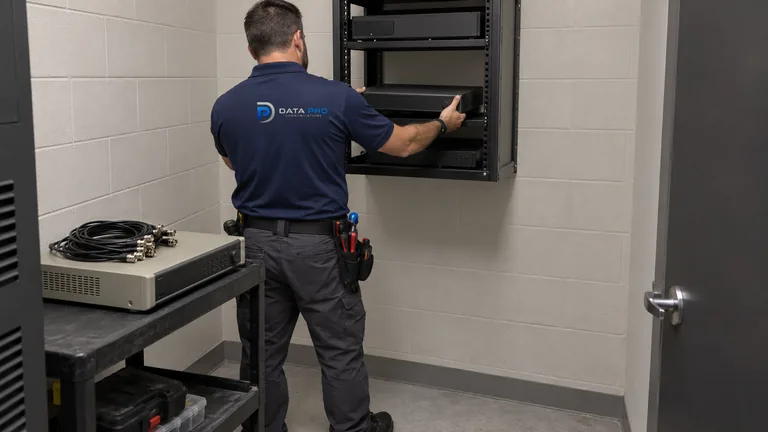
An upgrade can keep working cameras while replacing an unsupported DVR, failing coax or shared passwords.
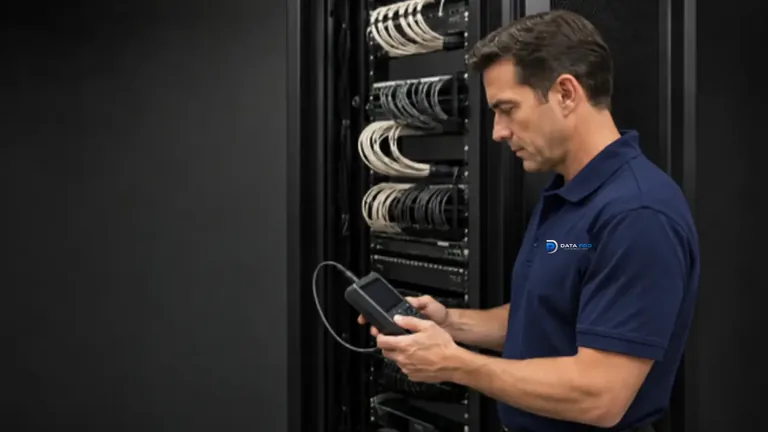
Structured Cabling
Cabling in older buildings and new spaces is tested, labeled and documented to a defined equipment location.
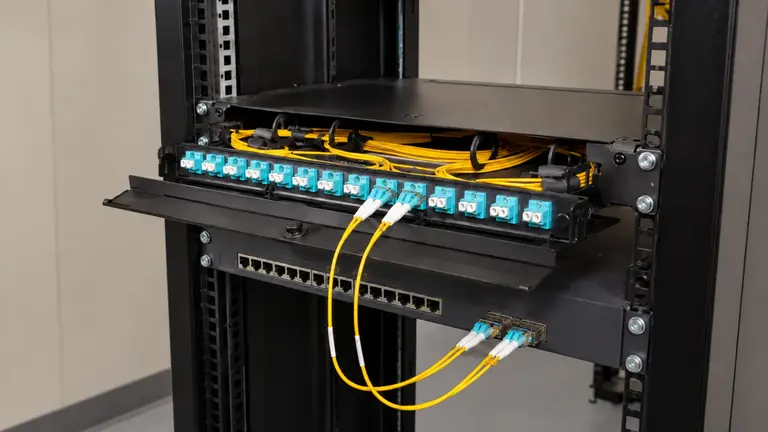
Network Infrastructure
Network work covers PoE switching, business Wi-Fi and any fiber or wireless link between separate buildings.
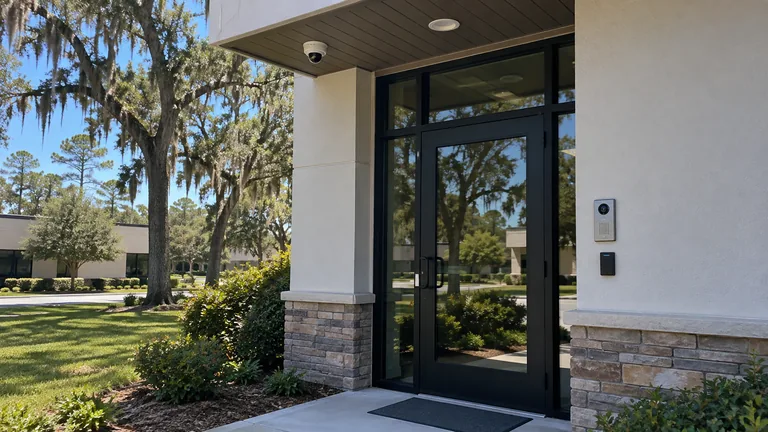
Door, gate and hangar credentials are issued and removed through the business's own process as staff and tenants change.
Williston is a city in Levy County and part of the Gainesville metropolitan area, with US 27 and US 41 serving the city. Williston Municipal Airport is a city-owned, public-use airport southwest of downtown, and the Devil's Den and Blue Grotto springs nearby draw divers to the area. Projects in Williston are served from the Ocala branch.
Each Williston request is reviewed from the exact address. Property type, road access, building age, distances between structures and the network service available determine the survey scope.
The site walk covers the street or highway entrance, parking, each door and service area and the location of the network equipment.
Views come from real Williston events, such as a vehicle entering from US 27, a delivery at a rear door or activity at a hangar after hours.
The plan assigns pathway access, power, network support, reuse decisions and work windows that fit the business's hours.
Once each view and recording search is proven, the business contact receives labeled devices, user accounts and a short guide to finding and exporting video.
Data Pro Communications serves commercial and professionally managed projects from the approved Ocala branch at 603 E Fort King St, Suite 84, Ocala, FL 34471. Call (352) 517-4404. FL License #EC13016138. License information is presented factually and does not replace project-specific permitting or compliance review.
Questions and answers
From the Ocala branch. The survey and installation happen at your Williston property, and visits are scheduled around your business hours.
The survey checks setbacks, sign lighting and vehicle angles, then positions entrance and parking views so headlights do not overwhelm the detail that matters.
Yes. Pathways, ceiling access and existing wiring are reviewed first so new cable and cameras can be installed cleanly with minimal disruption to the building.
Yes. Coverage is planned for the tenant's own hangar doors, gates and parking, within the boundaries and requirements set by the lease.
Yes. Yard gates, equipment parking and storage areas are planned around vehicle movement, lighting and the mounting points available.
Sometimes. Cameras and cable are tested for usable images; a phased upgrade can keep what still works while replacing the recorder and unsupported devices.
Yes, when it fits the scope. Access points, PoE switching and network segmentation can be planned with the cameras so the systems do not compete.
Yes. Farms and acreage around Williston are planned with gate, barn and outbuilding coverage connected by measured fiber, copper or wireless links.
Yes, when the business has a suitable internet connection. Each user receives an individual account with access limited to what they need.
The survey becomes a defined scope of views, pathways, equipment locations and customer responsibilities. Pricing and the installation schedule follow that approved scope.
Whether your Williston property is a downtown storefront, a highway business, a hangar near the airport or a rural operation, a site survey will define the camera views, cabling and network design it needs. Call (352) 517-4404 or request a site survey to get started.