
Survey Quality
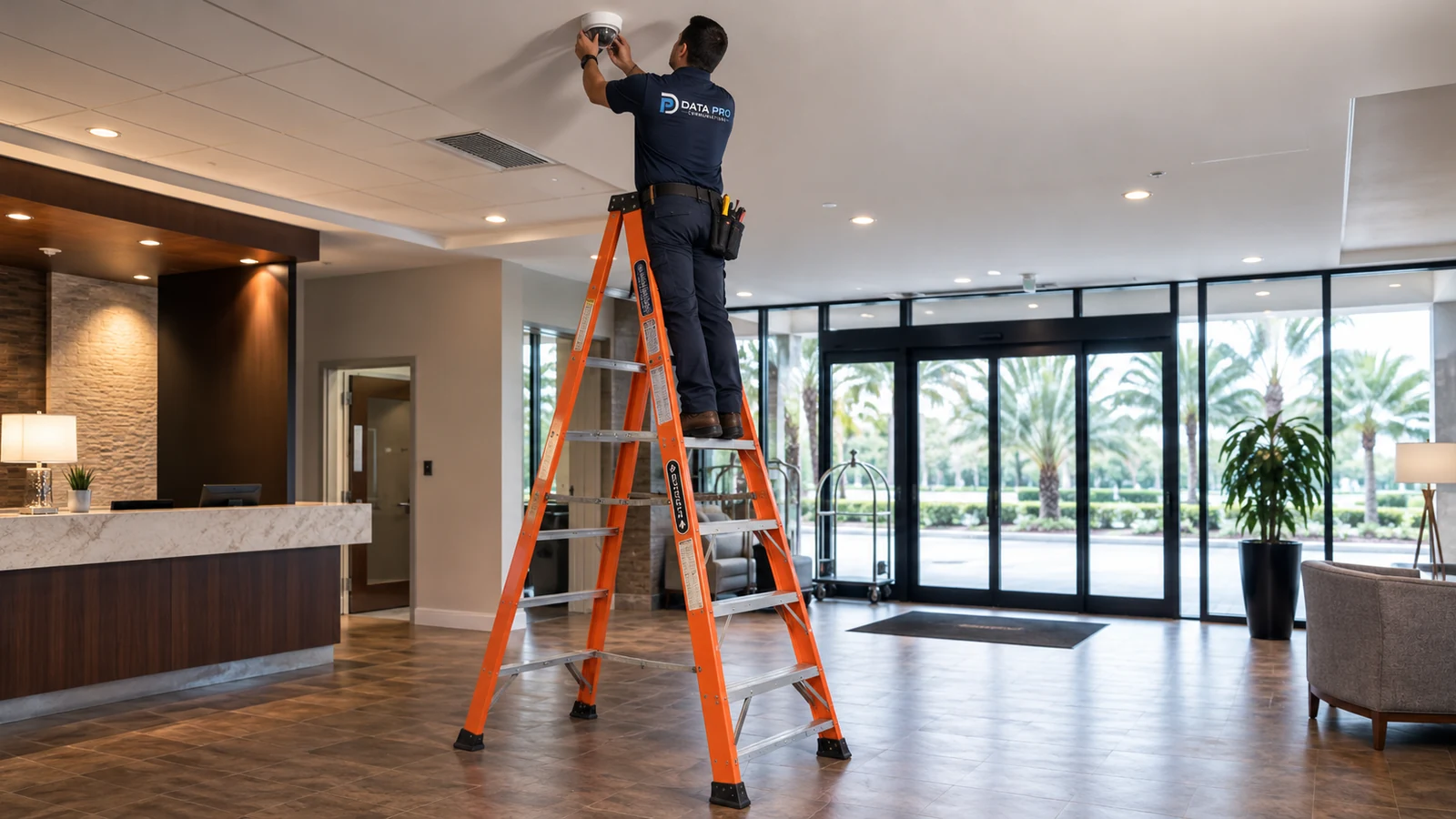
A credible survey connects each requested view to lighting, mounting, pathways, network transport and the activity being documented.
COMMERCIAL BUYER'S GUIDE
A commercial camera installer should be able to connect image goals, property conditions, network requirements and maintenance access in one coherent scope.
The strongest comparison is not the longest equipment list. It is the proposal that explains what was surveyed, what remains dependent on the site, how the system will be tested and what records the owner receives.
Project planning principles
A credible survey connects each requested view to lighting, mounting, pathways, network transport and the activity being documented.
Device quantities mean little unless proposals define assumptions, exclusions, owner responsibilities and acceptance criteria.
Plans, labels, device records and authorized credential handling make the installed system easier to operate and service.
Final images and recording behavior should be reviewed under the agreed operating conditions before the project is closed.
Verify the applicable Florida license and confirm that the proposed work fits the contractor's approved scope.
Commercial camera proposals can look similar while hiding very different levels of discovery. One may assume existing cabling is usable, another may include testing, and a third may place network or power responsibilities on the customer without saying so clearly. Those differences affect schedule, risk and long-term serviceability.
A buyer should ask how the installer translated operational needs into views, how infrastructure was evaluated, who owns configuration decisions and what will be demonstrated at closeout. Clear answers indicate that the system is being treated as an operating asset rather than a collection of devices.
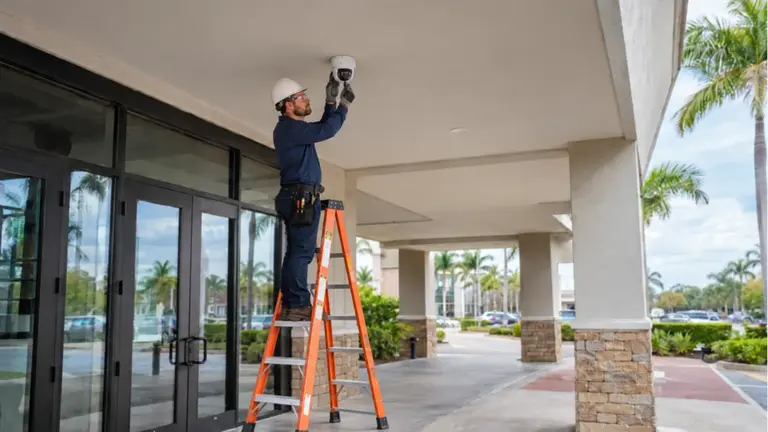
Ask the installer to state what each important view is meant to show. General awareness, facial detail, plate capture and wide-area context are different imaging tasks and may require different positions or devices.
Name the event the team needs to review.
Define the detail expected at the target area.
Identify day, night and seasonal lighting conditions.
The survey should trace mounting access, cable routes, equipment locations, network ownership and areas that require coordination. A quick walk-through may miss above-ceiling obstacles, distant buildings or operational restrictions.
Confirm who can open restricted rooms.
Note occupied areas and working-hour limits.
Measure the routes that affect medium and distance choices.
A proposal should say whether the installer is supplying pathways, cabling, fiber, network switches, cabinets or only camera equipment. Ambiguity here can create gaps between trades and delay commissioning.
When current equipment may remain, request a device inventory, recorder review, cable test approach and credential plan. Compatibility should be demonstrated for the exact models and functions involved, not assumed from brand names.
Determine what the owner receives: labeled devices, as-built locations, network addressing records, warranty information within approved scope and a controlled handoff of authorized administrative access.
Ask how the team will verify image framing, night performance, recording, playback, user access and system health. Support expectations should identify contact paths, coverage boundaries and customer responsibilities without vague promises.
An installer evaluating a professional office near central Ocala should be attentive to finished interiors, occupied schedules and discreet pathways. A warehouse or distribution property may shift the conversation toward docks, yard lighting, vehicle movement and remote network transport.
Equestrian and larger Marion County properties introduce still another test: the provider must be able to discuss detached barns, arenas, long driveways and gates without pretending that a standard building cable plan applies unchanged. The proposal should expose these property-specific choices instead of hiding them in allowances.
The proposal identifies the dock position, expected subject movement, nighttime light source, mounting height and the evidence the operations team expects to retrieve.
The scope lists the devices proposed for reuse and makes reuse dependent on model verification, cable condition, credentials and recorder support.
The installer states who provides power, pathway access, network ports and lifts, along with the dates those prerequisites are needed.
Acceptance includes playback from defined events, user-role review, device labels, as-built information and correction of agreed punch-list items.
A responsible proposal identifies unresolved conditions and explains the inspection, test or stakeholder answer needed to close each one.
Exclusions should be visible beside the work they affect. Buyers should not have to infer responsibility for lifts, conduit, network configuration or after-hours access.
Understand who will verify the finished images and recording behavior, and whether that person has seen the site assumptions behind the design.
Agree on labels, drawings, device records, administrative access and training deliverables while proposals can still be compared.
Advantages
Licensing and relevant commercial experience provide useful screening information.
Documented methods make proposals easier to compare.
A coordinated provider can reduce gaps among camera, cabling and network work.
Defined acceptance criteria improve project closeout.
Limitations and Conditions
A license alone does not prove that a proposal fits the property.
Product certifications do not replace a site-specific design explanation.
References should be evaluated without assuming another property matches yours.
No proposal can remove dependencies controlled by the customer or other trades.
A count does not explain view purpose, placement, lighting or recording. Ask for the operational reasoning behind the quantities.
Video traffic, addressing, remote access and switch capacity require an owner. A scope that ignores the customer's IT environment may leave essential work unassigned.
Existing cameras or cabling should not be carried into a proposal as guaranteed assets when their models, condition or access are unknown.
A picture on a monitor does not prove that recording, playback, user permissions, time settings and event retrieval meet the agreed use.
Ask for the actual request path, service boundaries and any customer actions needed to preserve system access and records.
Identify the people who approve camera views, network changes, privacy-sensitive areas and final acceptance.
Clarify who administers switches, recorders, user accounts and remote access before configuration responsibilities are assigned.
Provide access to equipment rooms, ceilings, gates and representative operating areas at times when important conditions can be observed.
Share current plans, device lists, warranties and test results when they are available and authorized for the project.
Name the electrical, construction, door, gate or IT contacts whose work affects the proposed schedule.
The proposal ties key views to defined business events.
Site assumptions and unverified conditions are explicit.
Infrastructure and other-trade responsibilities are assigned.
Existing equipment is evaluated by model, condition and supportability.
Recording, retention and remote access responsibilities are described.
Closeout includes labels, records, user access and acceptance tests.
Support boundaries and contact procedures are clear.
The applicable Florida license can be verified through the official state system.
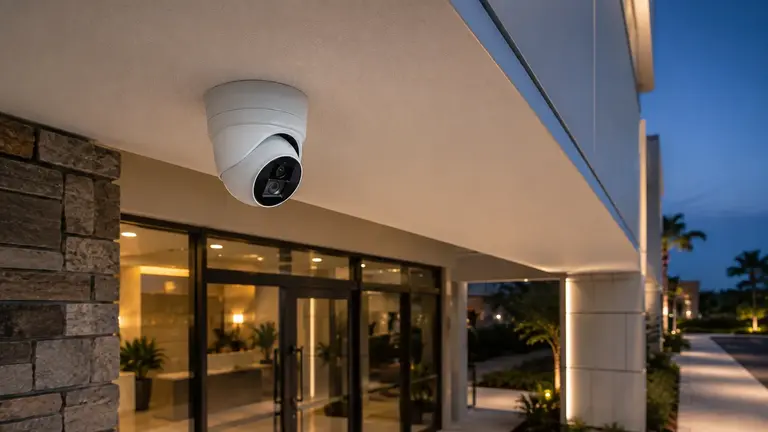
Review Data Pro's commercial installation scope after the buyer's evaluation criteria are established.
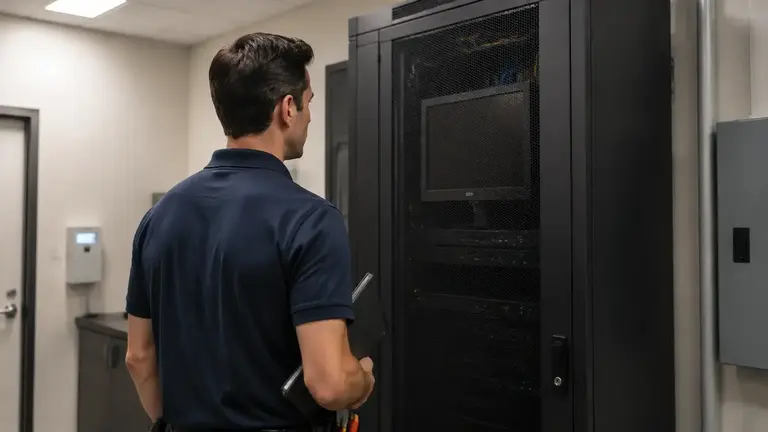
Use this service context when an installer must distinguish retained equipment from the modernization scope.
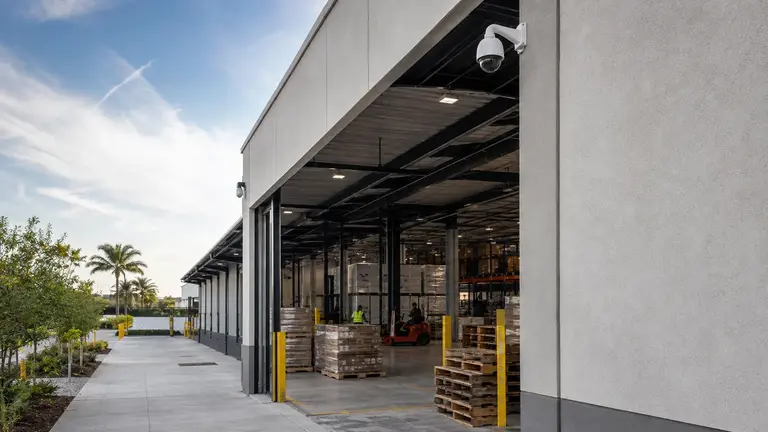
Apply the evaluation questions to wide sites with docks, yards, lighting changes and distant infrastructure.
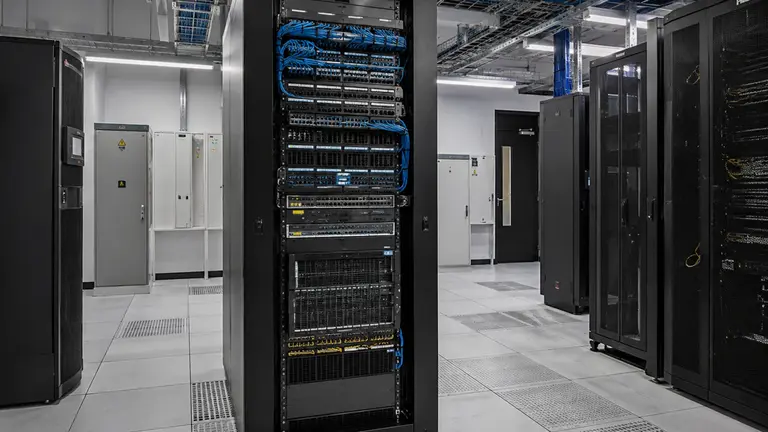
Understand the service boundary when camera transport, switching or remote connectivity requires network work.
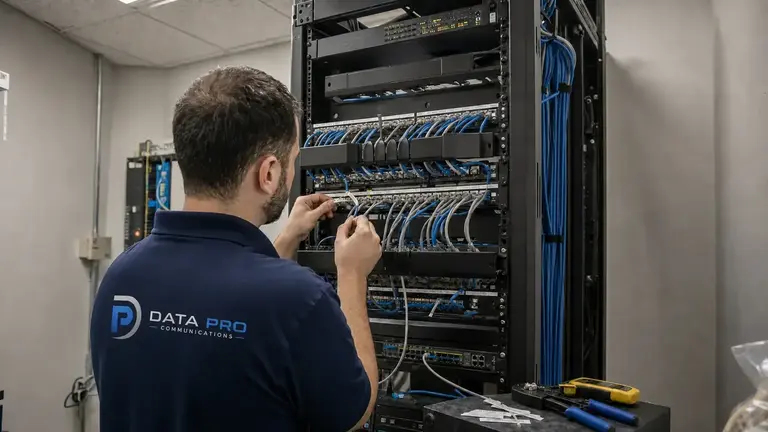
Compare post-installation support options, maintenance responsibilities and the information an authorized service technician will need after the system is in use.
Give finalists the same evidence goals, known constraints, desired records and stakeholder contacts so differences in scope are visible.
Allow enough access for each provider to inspect the routes, equipment spaces and operating conditions that affect the design.
Compare assumptions, exclusions, infrastructure, acceptance tests and documentation before comparing total price.
Document how remaining tests or owner decisions will be completed and how any resulting scope change will be approved.
Questions and answers
It should review the events the business needs to document, target areas, lighting, mounting positions, cable routes, equipment locations, network ownership and access constraints. The survey should also identify conditions that require measurement, testing or another stakeholder's decision.
Camera count is only one input. Compare the purpose of each view, expected detail, infrastructure scope, recording plan, commissioning method, documentation and exclusions before deciding whether two proposals are equivalent.
The installer should identify exact device and recorder models, cable types and condition, available credentials, software support and the functions expected from reused equipment. Reuse should remain conditional until those facts are verified.
Useful records may include device names and locations, cable or port labels, as-built plans, network addressing information, approved administrative access, test results and the final equipment list. The exact package should be agreed in the proposal.
IP video depends on switching, addressing, bandwidth, storage and authorized remote access. The proposal should identify who owns those decisions and whether the existing network can support the designed system.
Use the official Florida Department of Business and Professional Regulation license search and match the license holder and status to the proposed contracting entity. Data Pro Communications lists FL License #EC13016138 for its approved scope.
Commissioning should show that agreed views are framed under relevant conditions, video records and plays back, time settings are correct, user roles work and important devices are labeled. Any exceptions should be documented and resolved through the project process.
Be cautious with universal guarantees. Image results depend on target size, angle, motion, lighting, distance, environment, equipment settings and maintenance, so acceptance should be tied to defined site conditions and verified use cases.
The scope should describe how requests are submitted, what systems are covered, normal customer responsibilities and any conditions that affect response or access. Vague availability language is less useful than a defined process.
Bring them in before responsibilities are assigned. IT may own network and account decisions, facilities may control access and maintenance, and construction partners may own pathways, power coordination or schedule dependencies.
If the comparison exposes unknown cable routes, existing-system questions or unclear image goals, Data Pro Communications can review those conditions with the authorized facilities, IT and project stakeholders.