
Homosassa Springs Property Context
Homosassa Springs is an unincorporated market with dispersed roadside properties, mixed parcel sizes and occasional detached structures that require site-specific pathway and exposure decisions.
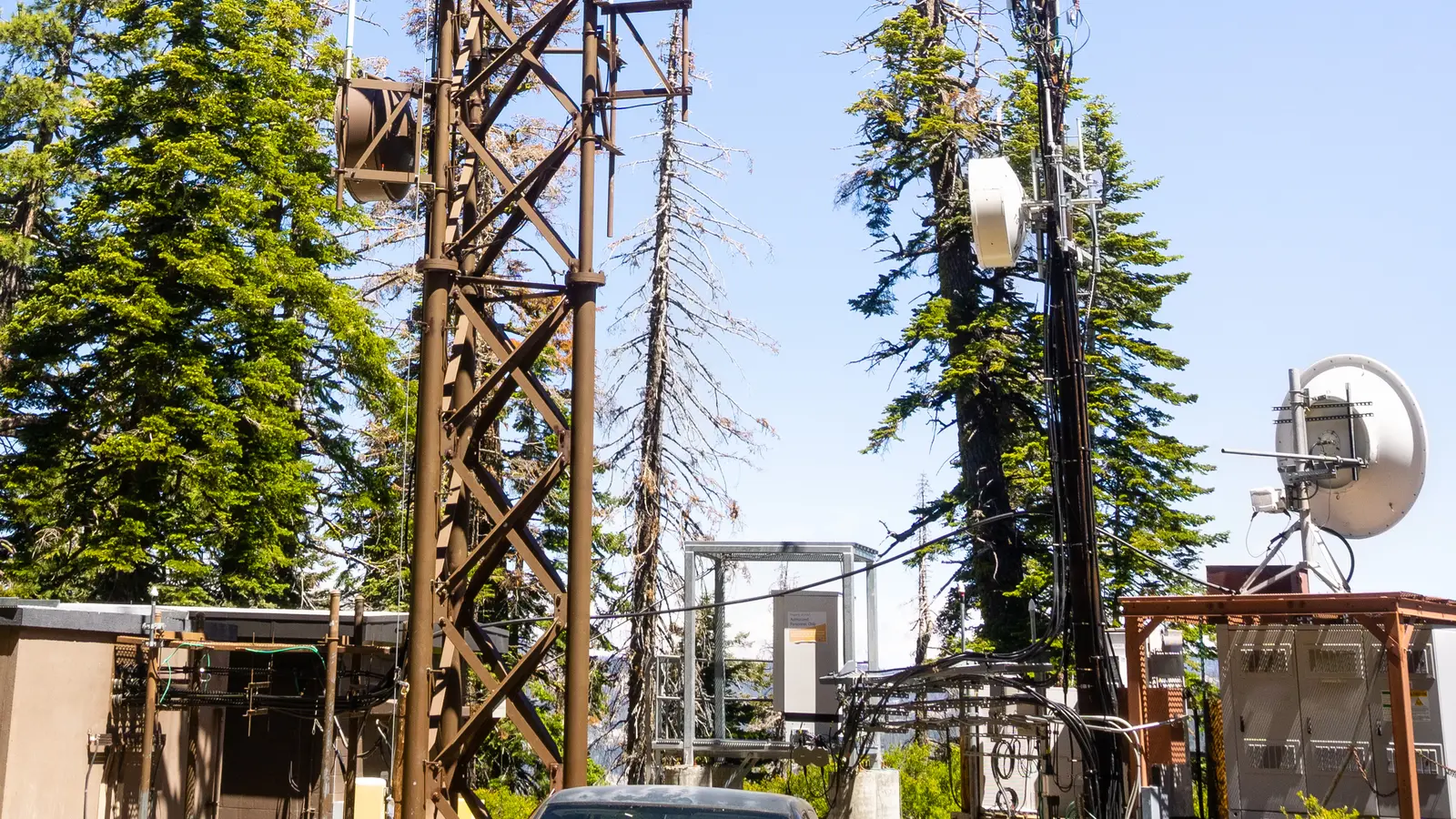
COMMERCIAL SYSTEM PLANNING FOR HOMOSASSA SPRINGS PROPERTIES
Homosassa Springs is an unincorporated service market with commercial sites dispersed along county and state-road corridors. Some properties require careful decisions about weather exposure, elevated equipment, outdoor pathways and the distance between buildings.
Because Homosassa Springs is dispersed and unincorporated, two nearby businesses may have completely different access, elevation and outdoor-pathway constraints. Data Pro Communications reviews the parcel, equipment location and distance between structures before preparing the scope.
Homosassa Springs is an unincorporated market with dispersed roadside properties, mixed parcel sizes and occasional detached structures that require site-specific pathway and exposure decisions.
Homosassa Springs planning distinguishes roadside customer access, hospitality activity, service yards and detached structures across dispersed parcels.
For a dispersed office or managed property, the critical question may be how to carry dependable video between buildings while protecting field equipment from verified outdoor exposure.
Data Pro Communications provides project-specific low-voltage work under FL License #EC13016138 for qualifying Homosassa Springs properties, including verified needs around small service yards.
Local camera planning begins at the individual parcel. A highway-facing business, a hospitality property and a service yard can share the same postal market while having very different access, lighting, flood conditions and network options. Data Pro Communications confirms those details during the site survey before defining equipment.
Relevant properties include roadside retail and service businesses, hospitality properties, commercial renovation sites, small service yards, dispersed office or managed properties, and sites with detached structures or exposed outdoor pathways. Homosassa Springs scopes begin with the individual parcel, accounting for its unincorporated setting, building separation and verified environmental conditions before choosing the connection design.
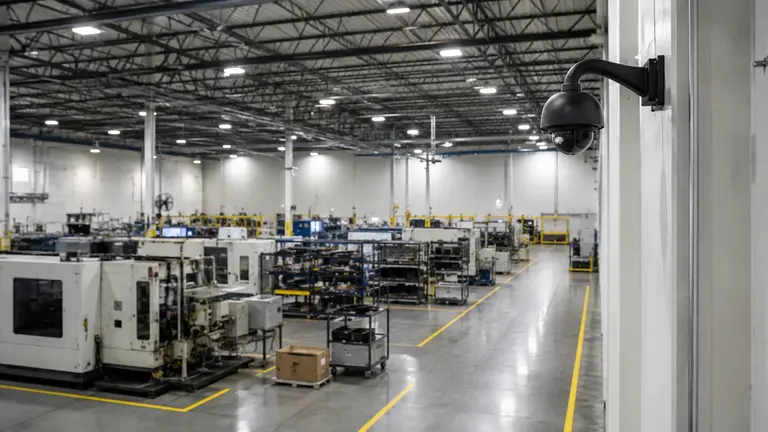
A Homosassa Springs mailing identity does not establish municipal boundaries, shared infrastructure or a common property type.
Some sites may require elevated or flood-protected equipment and pathway decisions confirmed from parcel-specific conditions.
Long exterior routes need weather protection, surge strategy and serviceable terminations.
A main building, storage area, parking edge and detached workspace may lack a central telecom location.
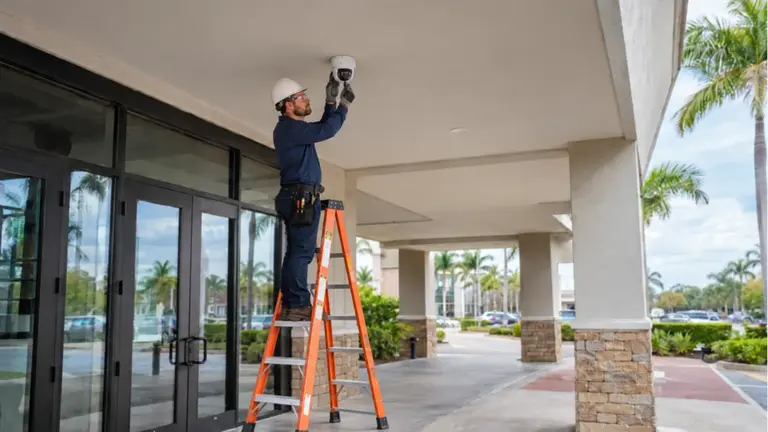
A roadside doorway, guest arrival and detached work area are framed at the distance and light needed for their separate operating decisions.
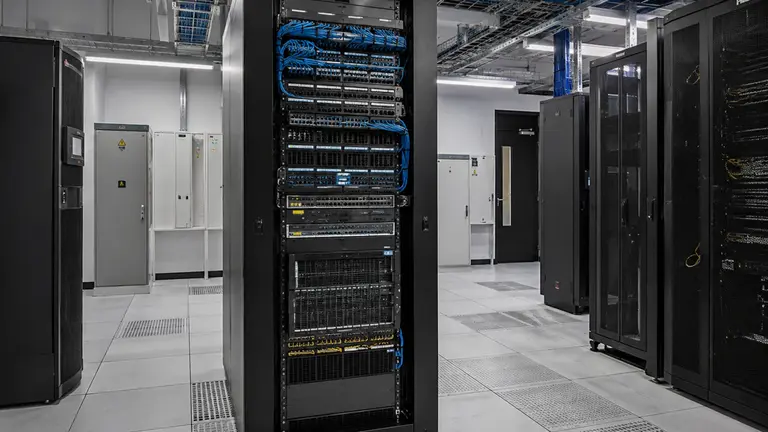
Hospitality retention reflects when management reviews guest or service events, while remote access depends on the property’s available bandwidth and authorized account structure.
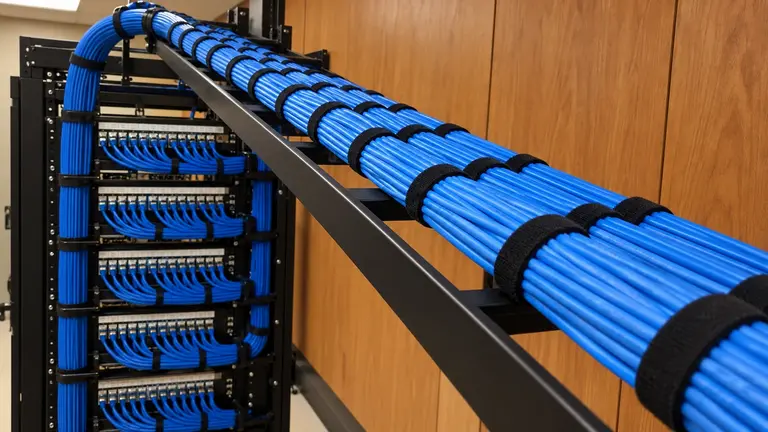
Outdoor Homosassa Springs routes receive durable protection and clear endpoint labels; occupied interiors use accessible paths that can be serviced later.
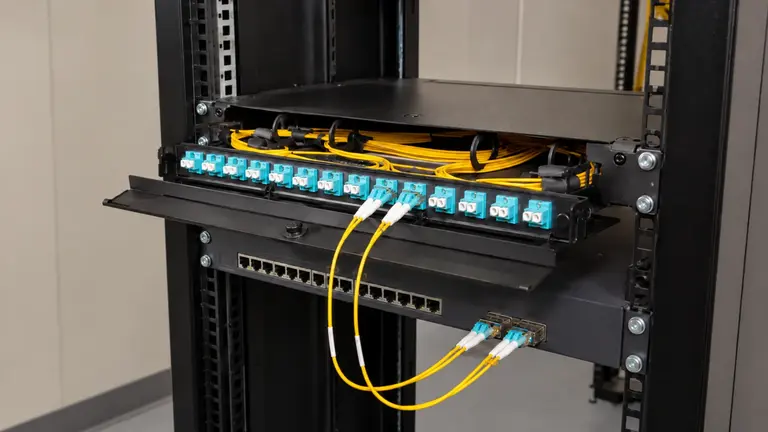
Renovation sites identify the future recorder location, switching responsibility and permanent remote-access owner before temporary networking is removed.
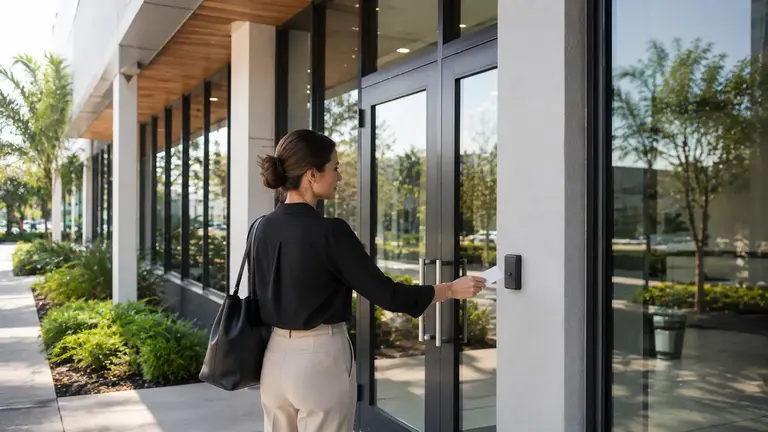
A dispersed property’s gate or intercom can share a video event only when the same authorized customer controls the systems and the field connection is reliable.

Outdoor exposure and prior alterations can affect inherited equipment differently across one parcel, so components are tested where installed and retained only when they remain supportable.
Roadside-business views cover the customer threshold and the property’s own vehicle approach without treating the surrounding corridor as the target.
Hospitality properties may need distinct guest, employee and service scenes because building separation and outdoor conditions reduce the value of one overview.
Renovation exteriors are evaluated for substrate condition, weather protection, lighting and the permanent cable path before new devices are chosen.
Service-yard work is timed around vehicle access and outdoor operations, with equipment staged away from active movement.
Detached structures are measured from the recording point across the actual parcel, including available power and every exposed transition.
Dispersed managed sites name the party responsible for remote users, shared connectivity and the final record covering each structure.
The Homosassa Springs survey follows roadside entry and outdoor work across the parcel, then assigns responsibility for field power, detached-building access and the network return.
Connectivity is chosen after the route between structures is walked, elevations and exposure are noted and service access to field equipment is confirmed.
At a small service yard, installed cameras are checked for weather damage and useful detail, field cable is proven and the recorder’s support and credentials are established.
Cutovers follow outdoor work and guest or customer schedules, with temporary links removed only after the permanent route performs correctly.
Homosassa Springs commissioning tests scenes across the parcel, confirms recorded playback and aligns field labels with the final route and equipment documents.
A roadside entrance event may display its approved camera when the business owns both systems and the association has been tested over the available connection.
Hospitality intercom can support a separated arrival point when someone is assigned to answer, audio use is approved and entry release is controlled.
Dispersed-office recording relies on a stable link between buildings and field hardware installed where it can be protected and reached for service.
Renovation integration defines the permanent owners of video, network and entry accounts before temporary construction access is closed.
Verify jurisdiction, site elevation constraints and the protected equipment location before finalizing any exterior camera or cabinet.
Plan the network return path first when cameras must cross open ground or reach a detached structure; avoid treating outdoor distance as an afterthought.
Homosassa Springs has a dispersed, unincorporated pattern of roadside businesses and mixed-size parcels. The survey should verify access, outdoor routes, detached structures and environmental exposure at the individual property.
Homosassa Springs installation is planned around parcel depth, detached structures and the roadside or hospitality events the customer needs to review.
Hospitality footage is retained for the operator’s documented review needs, and remote users receive only the access supported by the property’s connection and policy.
Weathered or altered existing systems are modernized from the weakest verified point, preserving only devices and routes that pass field checks.
Structured Cabling
Renovation cabling establishes permanent labeled routes between operating areas and the final telecom location after temporary paths are removed.
Network Infrastructure
Service-yard networks are sized for approved outdoor cameras, the measured return link and realistic remote-viewing demand.
Credentials for a dispersed managed property are controlled by the authorized operator for the specific gate or door, with users limited by role.
Homosassa Springs is dispersed and unincorporated, so nearby corridor businesses may differ sharply in parcel depth, environmental constraints and the distance between operating structures.
Homosassa Springs projects are evaluated parcel by parcel because postal proximity does not reveal building separation, outdoor exposure or network reach. The full address, access route, detached structures and proposed equipment location allow Data Pro Communications to prepare the survey and confirm service availability.
The field visit walks from the roadside entrance to guest, service and detached-building areas, checking the exposed infrastructure connecting them.
Homosassa Springs view tests use the actual parcel’s light, weather exposure and distance, whether the event occurs at a guest entrance or an outlying work area.
The project assigns responsibility for outdoor routes, field power, network return, retained equipment and weather-appropriate work periods.
After detached-area and service-yard views are proven, playback is demonstrated and route, device and account records go to the customer’s authorized project team.
Data Pro Communications serves commercial and professionally managed projects from the approved Ocala branch at 603 E Fort King St, Ocala, FL 34471. Call (352) 517-4404. FL License #EC13016138. License information is presented factually and does not replace project-specific permitting or compliance review.
Questions and answers
No. Homosassa Springs is an unincorporated/CDP service market. Data Pro Communications serves qualifying commercial properties there through the approved Ocala branch.
The project team reviews parcel-specific flood information, site conditions and applicable requirements. Cameras, cabinets, power supplies and terminations are placed only after those constraints are confirmed.
Vehicle approaches, storefront entry, parking, delivery access, nighttime lighting and the route back to secure recording equipment should be reviewed as separate conditions.
Possibly. A clear line of sight, stable mounting, power, capacity and maintainable equipment locations are required. Vegetation and future obstructions are considered before relying on the link.
The design addresses pathway, enclosure, surge, grounding, penetrations and service loops appropriate to the verified site. Exposed cable is not treated as a substitute for a planned route.
Only after ownership, credentials, cable condition, compatibility and image performance are confirmed. Unknown cloud accounts or unsupported devices may require replacement.
Identify public arrival, staff and delivery doors, restricted service areas, busiest hours, network contacts and any equipment location affected by moisture or flooding.
The scope identifies a secure recording and network core, then measures each connection. Fiber, local switching or a designed wireless path may be evaluated for buildings beyond normal copper reach.
Yes. The customer and project team can establish work zones and time windows that protect access and operations. The plan should account for testing without exposing guests or staff to unsafe work areas.
Data Pro Communications documents the approved views, environmental conditions, pathways, reuse findings and customer responsibilities. A defined proposal follows before work is scheduled.
Request a site survey for your Homosassa Springs commercial property so the team can confirm access, environmental conditions, outdoor pathways and any detached structures. Those findings will guide the camera, network and equipment-location decisions in the final scope.