
Dedicated Capture Task
The plate camera is aimed and configured for a narrow target rather than being asked to provide a wide security overview.
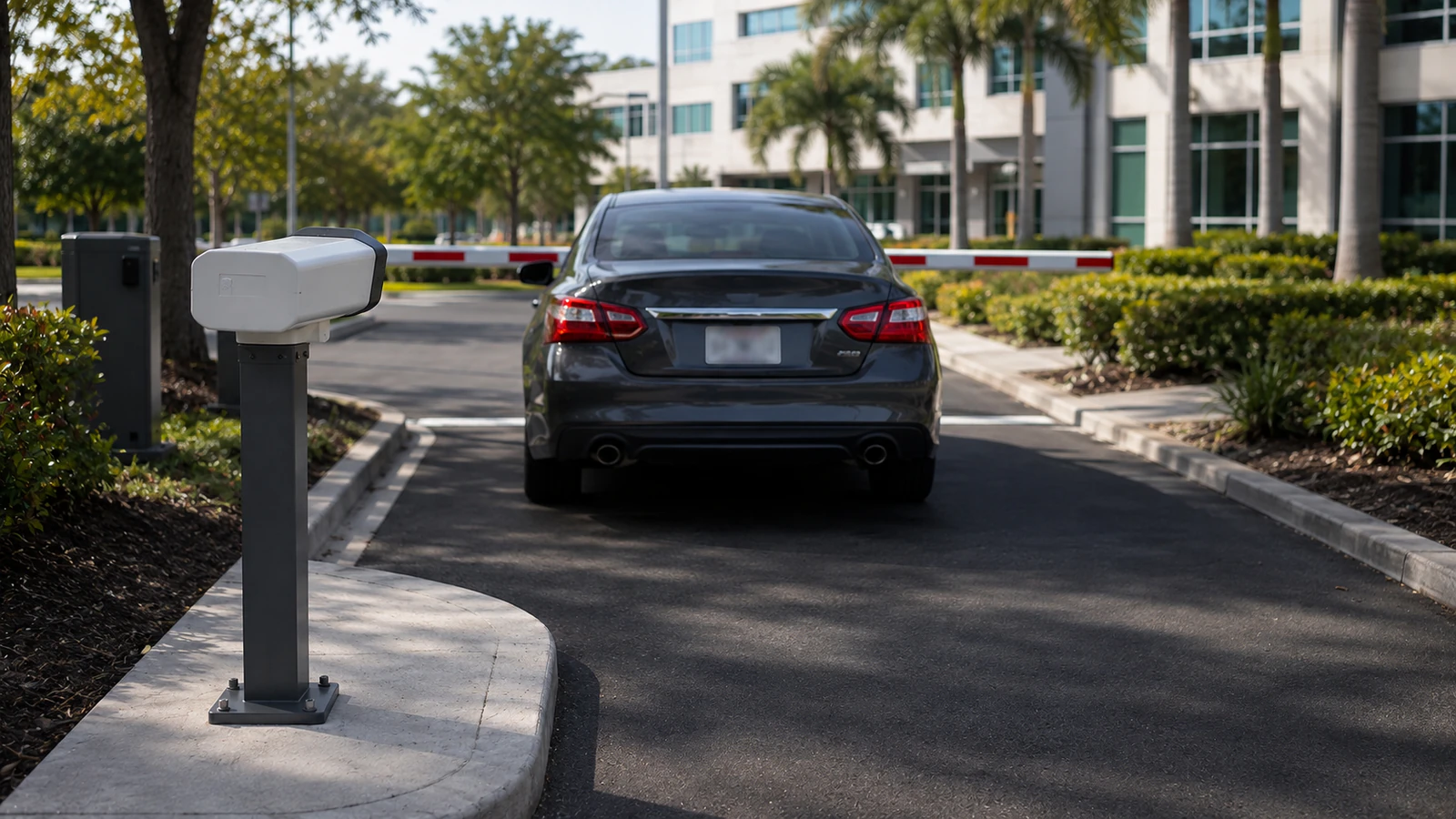
PLATE-CAPTURE DECISION GUIDE
License plate capture depends on a controlled image of the plate, not simply a clear-looking view of the entrance.
Vehicle direction, speed, distance, lane width, camera angle, headlights and nighttime illumination must be considered together, usually with one dedicated plate view and a separate overview of the vehicle or gate event.
Project planning principles
The plate camera is aimed and configured for a narrow target rather than being asked to provide a wide security overview.
Approach direction, distance and mounting angle determine whether the plate occupies a useful, readable portion of the image.
Vehicle speed, shutter behavior, headlights and supplemental illumination must be evaluated under actual lane conditions.
A second view can show vehicle type, color, direction and the larger gate event without compromising the plate image.
Representative vehicles and day and night tests are used to confirm the capture zone; universal plate-read promises are not appropriate.
LPR planning begins where the vehicle will be most predictable. A straight approach, controlled speed and defined capture point allow the camera to dedicate pixels and exposure to the plate. Curves, multiple lanes and fast lateral movement make that task harder.
A general surveillance camera can show that a vehicle entered while still failing to produce a readable plate. Dedicated plate-capture equipment and settings manage motion, glare and exposure for the target, but the property must still provide workable geometry, mounting, power, network transport and light.
Choose a location where vehicles travel in a consistent direction and, when possible, slow naturally. Mark the intended capture zone on the lane so distance and angle are measured to the same point.
Record ingress and egress separately.
Note turns, stops and gate queue positions.
Identify motorcycles, trailers or unusual vehicle paths that matter.
Keep the view as close to the travel direction as the site allows and avoid excessive height or side offset. The camera should also be level enough that plates do not appear strongly tilted in the image.
Faster vehicles allow less exposure time and can increase blur. The camera, lens and lighting must support the intended speed at the chosen distance rather than relying on default surveillance settings.
At night, plates can be bright while the rest of the scene is dark. Dedicated infrared or controlled lighting, camera exposure and mounting alignment need to be tested with approaching headlights.
Multiple lanes change target distance and angle. A single camera may not provide equivalent results across near and far lanes, so each travel path should be evaluated independently.
Use the specialized view to capture the plate and another camera to explain the vehicle, gate position and surrounding activity. This division protects both evidence goals.
A commercial entrance with a staffed gate or controlled queue may provide a stable place to slow vehicles and separate lanes. The design can use that predictability, provided the capture position does not interfere with gate equipment, access-control readers or safe traffic flow.
Long driveways and remote gates on Marion County equestrian properties may have power and connectivity farther from the main building. In that case, the lane geometry can be excellent while the infrastructure is difficult. The plan must solve the remote cabinet, fiber or wireless link and service access without representing plate capture as an animal-care function.
The capture zone is placed before or at the controlled stop where the plate faces the camera consistently, while a second view shows the gate and driver interaction.
The survey finds the straightest section before the curve, then measures whether the available mounting point keeps side angle and distance within the selected camera's design range.
Near and far lanes are evaluated separately because one position can create unequal distance and horizontal angle. The final plan may allocate a view by lane.
Testing includes headlights, plate reflection and nearby signage so illumination and exposure are not tuned on an empty lane.
Lane markings, gate position and traffic flow can create a repeatable approach. A predictable target is often more valuable than adding resolution to a poor angle.
Use the vehicle types, speeds and lane positions that actually use the property, including both ingress and egress when both matter.
Do not widen the plate camera to recover general scene context. Assign that job to an overview camera.
Record the lane position, distance, expected speed, camera mount and representative day and night images used for acceptance.
Advantages
Dedicated settings preserve plate detail that an overview view may lose.
Controlled lanes create repeatable imaging conditions.
Separate plate and overview cameras provide complementary evidence.
Documented capture zones make future verification more objective.
Limitations and Conditions
No camera can remove every effect of speed, angle, glare, obstruction or damaged plates.
Far and near lanes may not perform equally from one mount.
Gate changes or new traffic patterns can move vehicles outside the accepted zone.
Remote entrances need dependable power, network transport and maintenance access.
A wide overview can look sharp while the plate is too small, angled or blurred for its intended use.
Strong lateral travel increases angle and motion problems. The mounting position should favor vehicles moving toward or away from the camera.
Night headlights and reflective plates can change the exposure problem completely. Acceptance needs representative dark conditions.
Vehicles may hug different sides, tow trailers or queue beyond the intended position. The survey should observe real behavior rather than an ideal centerline.
Widening the image for context reduces plate detail, while optimizing exposure for plates can make the rest of the scene less informative.
The camera needs a rigid position that preserves alignment and can be reached for cleaning and adjustment.
Confirm the available low-voltage equipment plan and any electrician-owned work without assuming an existing gate circuit can supply the camera system.
Measure the route to the recording or processing location and choose copper, fiber or wireless transport appropriate to distance and site conditions.
Define where the plate and overview streams record, how time is synchronized and how authorized users retrieve the event.
Dust, insects, vegetation, rain and lens contamination can degrade a narrow capture view, so inspection access and cleaning responsibility matter.
Map every lane and travel direction.
Mark the intended capture point.
Measure camera offset, height and target distance.
Record typical and maximum approach speed.
Observe headlight and ambient light after dark.
Separate plate and overview evidence goals.
Confirm mounting, power and network routes.
Plan day and night verification with representative vehicles.
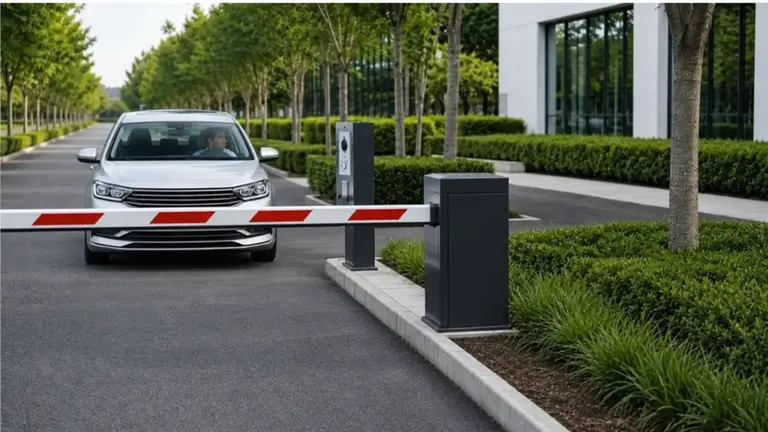
The gate service covers entry devices and access workflows, which remain separate from the plate-imaging task explained here.
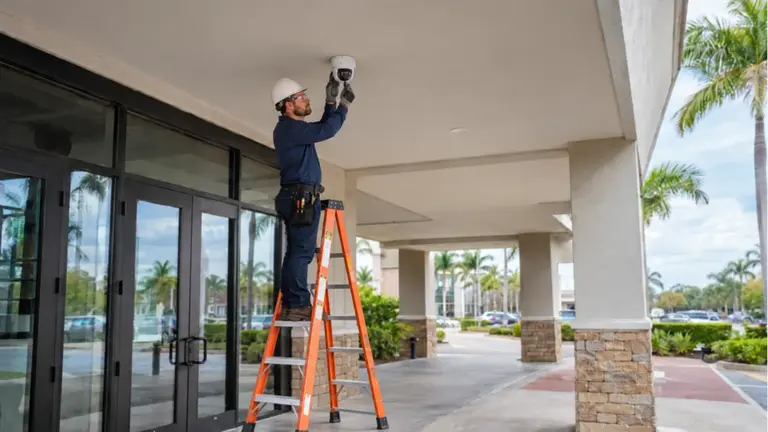
Use the camera service context when the accepted plate and overview design moves into implementation.
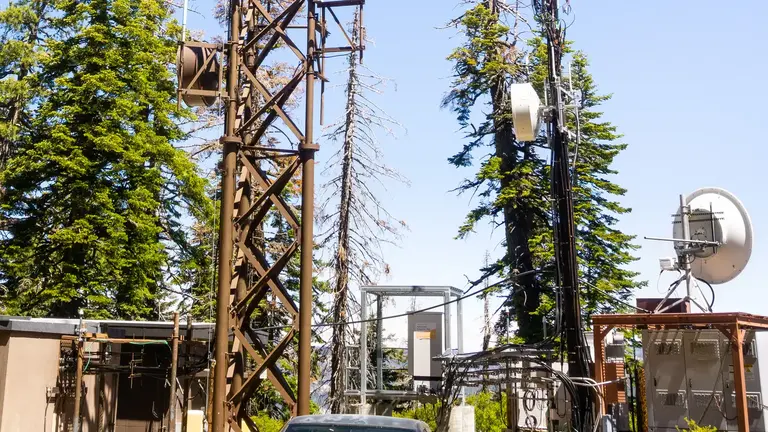
Consider a surveyed wireless path when a remote entrance lacks a practical wired route.
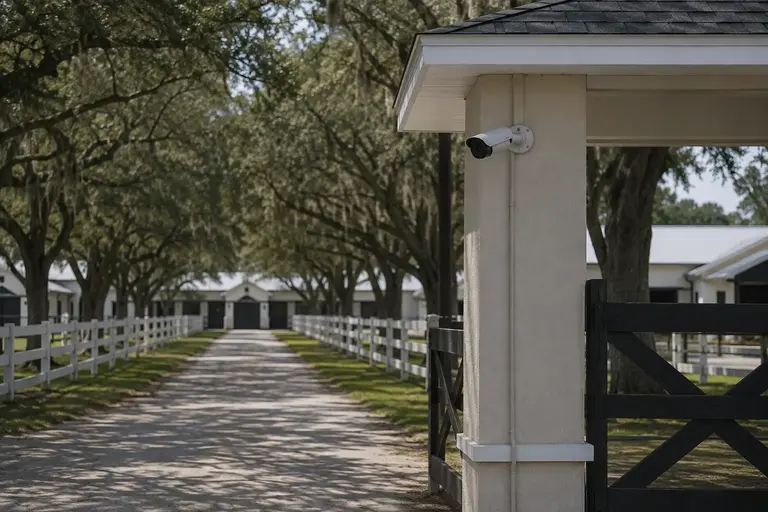
Connect remote-gate imaging to the broader infrastructure questions on horse farms and large properties.
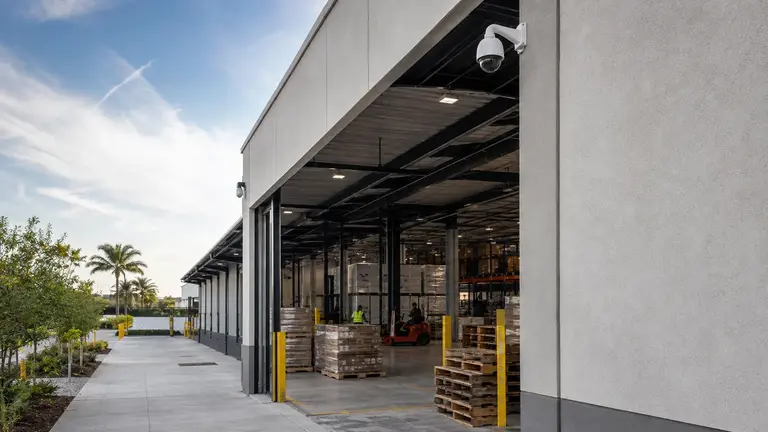
Coordinate plate capture with vehicle circulation, staging and general yard coverage.
Document actual direction, speed, queue behavior, vehicle types and day and night lighting.
Record height, offset, distance and the angles created at the intended capture point.
Use representative vehicles to adjust aim, focus, exposure and illumination while preserving the designed lane position.
Verify the plate view, overview sequence, recording, time settings and documented acceptance images.
Questions and answers
It may capture a readable plate under favorable conditions, but general surveillance settings are not automatically suitable for reliable plate imaging. Dedicated LPR or plate-capture planning addresses target size, angle, motion, exposure and nighttime illumination.
A large side or vertical angle distorts the plate and reduces the useful target area. Positioning the camera closer to the direction of travel generally gives the system a more consistent plate image.
A plate camera is usually framed and exposed for a narrow capture task. A separate overview camera is often the better way to show vehicle type, color, gate position and the surrounding event.
Faster motion requires settings and illumination that limit blur while preserving enough light for the image. The acceptable speed depends on the camera, distance, angle, lighting and lane behavior, so it should be tested at the site.
Headlights, reflective plates and dark surroundings create a different exposure problem from daylight. Night testing confirms whether the selected position, illumination and settings preserve plate detail with representative vehicles.
Possibly, but the near and far lanes may have different distance and horizontal angle. Each lane should be measured and tested; separate views may be appropriate when one position cannot give comparable target conditions.
Choose a predictable part of the approach where vehicles are aligned and moving at a manageable speed. A stop, queue or straight segment can be useful, provided the camera position and traffic design remain safe and practical.
It needs stable mounting, an approved power plan, network transport, recording or processing access and a serviceable equipment location. Long entrances may require fiber, point-to-point wireless or a protected remote cabinet.
No universal guarantee is appropriate. Results vary with plate condition, obstruction, speed, lane position, weather, light, camera alignment and maintenance, so acceptance should use defined site conditions and representative tests.
LPR planning focuses on obtaining a useful plate image. Gate access control decides whether and how an entrance opens; the systems can be coordinated, but they have separate purposes and acceptance criteria.
Before equipment is finalized, a site review can measure the approach, target distance, lighting and network route, then establish separate plate and context views for representative testing.