
Dunnellon Property Context
In Dunnellon, older buildings and larger west Marion County parcels can create very different cabling routes, equipment locations and connections to detached structures.
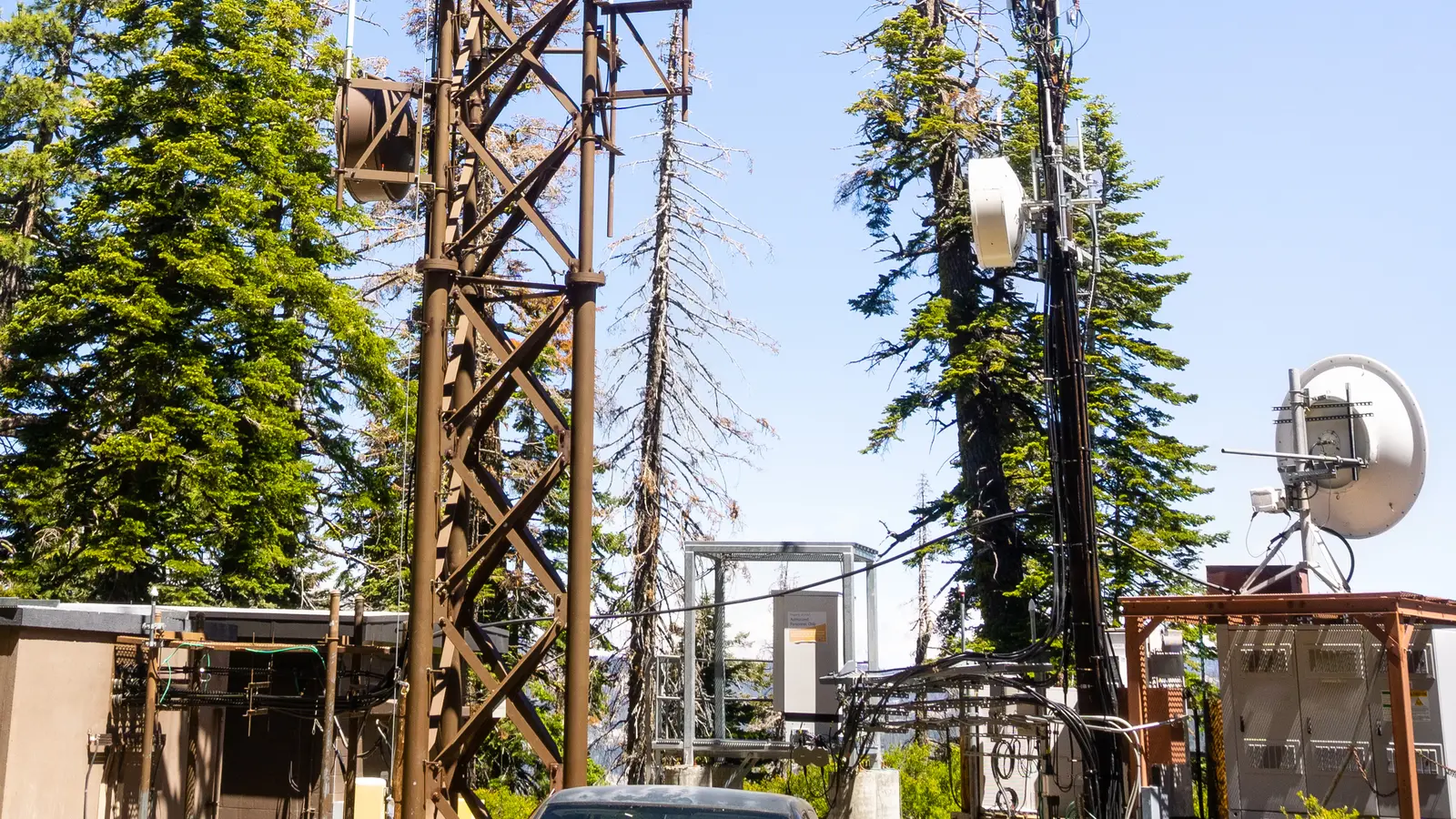
COMMERCIAL SYSTEM PLANNING FOR DUNNELLON PROPERTIES
Dunnellon-area work can involve a compact business near the established city center, a highway-facing service property or a larger parcel with gates and outbuildings. Those conditions call for measured pathways and deliberate view priorities, especially when the existing building has limited telecom space.
Dunnellon projects may require careful work in an older in-town building or a measured connection to storage, gates or detached structures on a larger parcel. Data Pro Communications evaluates those routes, power sources and equipment locations before defining the camera and network scope.
In Dunnellon, older buildings and larger west Marion County parcels can create very different cabling routes, equipment locations and connections to detached structures.
Dunnellon coverage is organized around the compact business core, highway-facing service access and the separate activity of outbuildings on larger parcels.
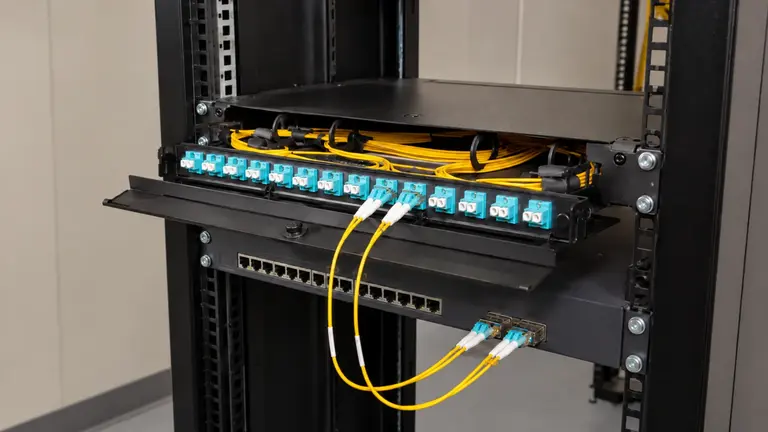
A larger west Marion parcel may call for a field cabinet, fiber or a carefully engineered wireless hop when detached structures sit beyond reliable copper reach.
Data Pro Communications provides project-specific low-voltage work under FL License #EC13016138 for qualifying Dunnellon properties, including verified needs around community and institutional buildings.
A useful Dunnellon scope begins with how the property is approached and how far the system must travel. Public entries and point-of-sale areas may sit close together, while storage, parking, docks or detached work areas can require a separate connectivity decision instead of an improvised long cable run.
Relevant properties include historic-center businesses, highway service properties, older mixed-use buildings, professional offices, larger commercial parcels, and community and institutional buildings. Dunnellon projects balance constrained older interiors with measured outdoor connections, choosing routes that can be maintained without improvised extensions.

Renovated buildings may have constrained chases, mixed ceiling types and little documentation of previous low-voltage work.
Storage buildings, workshops or gatehouses may sit beyond reliable copper-network distance.
A route from the main building to a remote area must account for lightning exposure, grounding, weather and future service access.
Smaller businesses need focused coverage and usable retention rather than an oversized enterprise design.
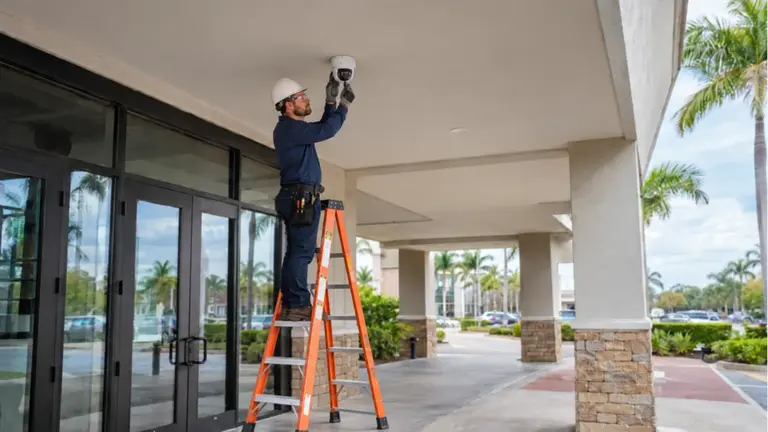
Close doorway detail in the city core and broader vehicle context on an outlying parcel are treated as separate design tasks.
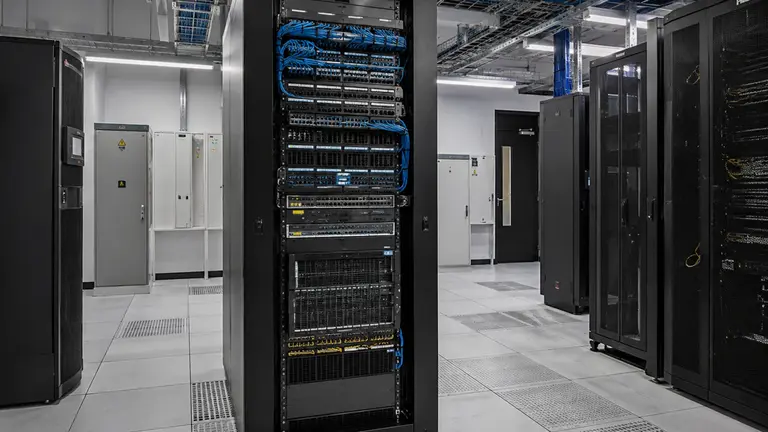
Recorder placement in an older Dunnellon building must fit available cooling and network service, while retention reflects how often the local operator can review footage.
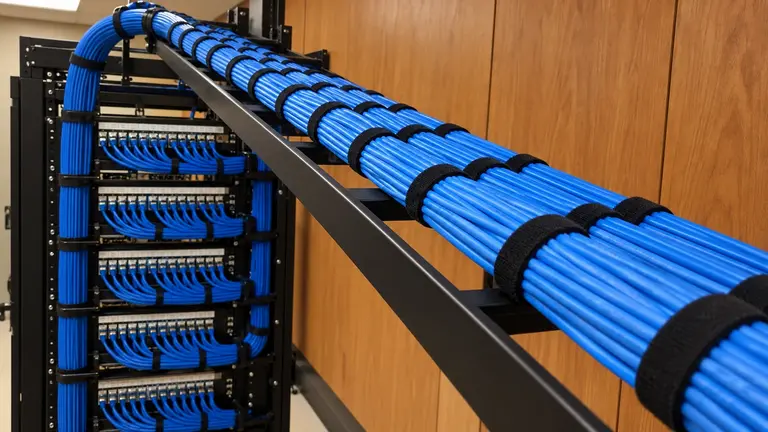
Where finished interiors offer limited access, new cable follows an agreed serviceable route and every reused segment is identified at both ends.
A professional office needs a known network administrator, adequate PoE and a secure recorder location before off-site access is configured.

A camera may support a remote gate decision on a larger parcel when the same customer governs both systems and the entry procedure has been documented.

Older Dunnellon buildings are inspected for hidden analog equipment, unsupported recorders and altered cable routes; the findings determine what can stay and what must be retired.
Historic-center views emphasize the customer doorway and immediate business frontage while respecting adjacent properties and pedestrian space.
At a highway service property, separate angles can distinguish public arrival, employee access and deliveries without relying on a distant overview.
Professional-office exteriors are reviewed for mounting limits, nighttime contrast and discreet cable entry compatible with the building’s finish.
Institutional and community-building work is arranged around public hours, scheduled programs and access to occupied rooms.
Detached storage and gate locations are surveyed from the head-end, with span length and terrain guiding the backbone design.
Shared or public-facing facilities receive a named system custodian and clear permissions for viewing, exports and closeout records.
In Dunnellon, the survey starts at the compact public entrance, follows service movement toward parking or highway access and then measures any route to outlying structures.
The design records every wall penetration, exterior transition and long parcel crossing before selecting cable or wireless transport.
Recorders and cameras in an older community building are checked for image quality, supported firmware, intact cable and recoverable administrative access before reuse is accepted.
Work in occupied offices or institutional spaces is divided into quiet periods and controlled cutovers that protect normal access.
Dunnellon commissioning compares the installed doorway and service-area images with the agreed goals, then verifies recording and updates the equipment record.
A historic-business door event may reference video when the owner controls the entry hardware and the association works reliably during testing.
For a highway service counter, intercom can support a locked arrival point if the customer defines who answers and who may grant access.
Large-parcel recording depends on a stable connection from the detached area and field components positioned where future service is practical.
Dunnellon integrations document control of the office network, entry hardware and any exterior route crossing shared or older building areas.
Prioritize cash-handling, public entry, side-access and storage views before extending coverage to lower-value open areas.
Treat every detached structure as a small infrastructure node by confirming power, enclosure, grounding and the return path to the recorder.
In Dunnellon, an older in-town building may call for careful pathway reuse, while a larger west Marion County parcel may require measured outdoor links to gates or detached structures. The property survey determines which condition applies and how the network should be extended.
A Dunnellon installation favors purposeful doorway and service views, with recording located where the business can operate and maintain it.
Retention for a highway service property follows its actual incident-review cadence; remote access is limited to named users and a supportable connection.
An older recorder may be retained temporarily when its health and compatibility are proven, allowing the property to replace weaker parts in a logical sequence.
Structured Cabling
Professional-office cabling uses documented pathways that respect finished interiors and terminate in an accessible, secure communications location.
Network Infrastructure
Community-building networks are sized for the approved cameras and recording traffic while leaving room for known access or connectivity needs.
On a larger parcel, gate access is managed through customer-owned credentials and a defined process for issuing and revoking them.
Dunnellon sits within west Marion County, where city businesses and larger outlying parcels can share a postal market while requiring very different cabling and remote-building strategies.
For a project outside Dunnellon’s compact core, the address and parcel layout matter more than a broad market label. Data Pro Communications reviews building age, road access, detached structures and the available network head-end to confirm survey requirements and coverage eligibility.
The site walk moves from the historic storefront or service entrance to parking, utility areas and any remote structure that must join the system.
Dunnellon view planning turns specific events, including a doorway transaction, a highway delivery or movement at a detached building, into testable detail and lighting requirements.
Older-building routes, remote power, reusable devices and occupied work periods are assigned before installation begins.
The final Dunnellon review demonstrates approved institutional or service-area images, confirms recorder operation and gives the customer’s designated contact a complete labeled record.
Data Pro Communications serves commercial and professionally managed projects from the approved Ocala branch at 603 E Fort King St, Ocala, FL 34471. Call (352) 517-4404. FL License #EC13016138. License information is presented factually and does not replace project-specific permitting or compliance review.
Questions and answers
Older or renovated buildings can have limited chases, mixed ceiling construction and undocumented wiring. The survey checks feasible paths and mounting surfaces before the scope assumes concealed cable access.
The choice depends on measured distance, available conduit, power, line of sight and environmental exposure. Fiber is often considered for reliable long runs, while engineered wireless may fit a clear path where trenching is impractical.
Yes. A focused first phase can protect primary entry, transaction, storage and after-hours access points. The infrastructure should still allow the customer to expand without replacing the original core.
Conditions are evaluated at the individual property. Exterior equipment, penetrations, cabinets and pathways are selected and installed for the verified exposure rather than based on a general citywide assumption.
Possibly. Its route, condition and termination quality must be inspected, and the selected solution must support the required image, power and serviceability. Phased hybrid modernization can be considered when it is technically justified.
The plan may distinguish customer entry, parking, service bays, storage and roadside vehicle approaches. Each view should have a defined purpose so glare and long distance do not reduce usable detail.
A powered gate can operate independently, but cameras, intercom and managed credentials may need a dependable network path. The full entry workflow is reviewed before these components are combined.
Work is divided into accessible zones and scheduled around deliveries, customer traffic and limited staff coverage. Network or recorder changes are planned so avoidable downtime does not occur during peak activity.
The project scope should identify who controls power, network accounts, cabinets and physical access. Serviceable placement and labeling matter because a remote device can otherwise be difficult to diagnose.
Data Pro Communications turns the field review into a defined set of views, pathways, equipment locations and customer responsibilities. Pricing and scheduling are based on that approved site-specific scope.
Plan the next step for your Dunnellon property with a site survey that addresses the building, outdoor routes and any detached structures. Data Pro Communications will document the views, connectivity choices and reuse findings needed for a clear project scope.