
New Camera Projects Begin with a Dedicated Assessment
Security Camera Installation begins with required views, site conditions, pathways, recording, and commissioning for a new commercial system.
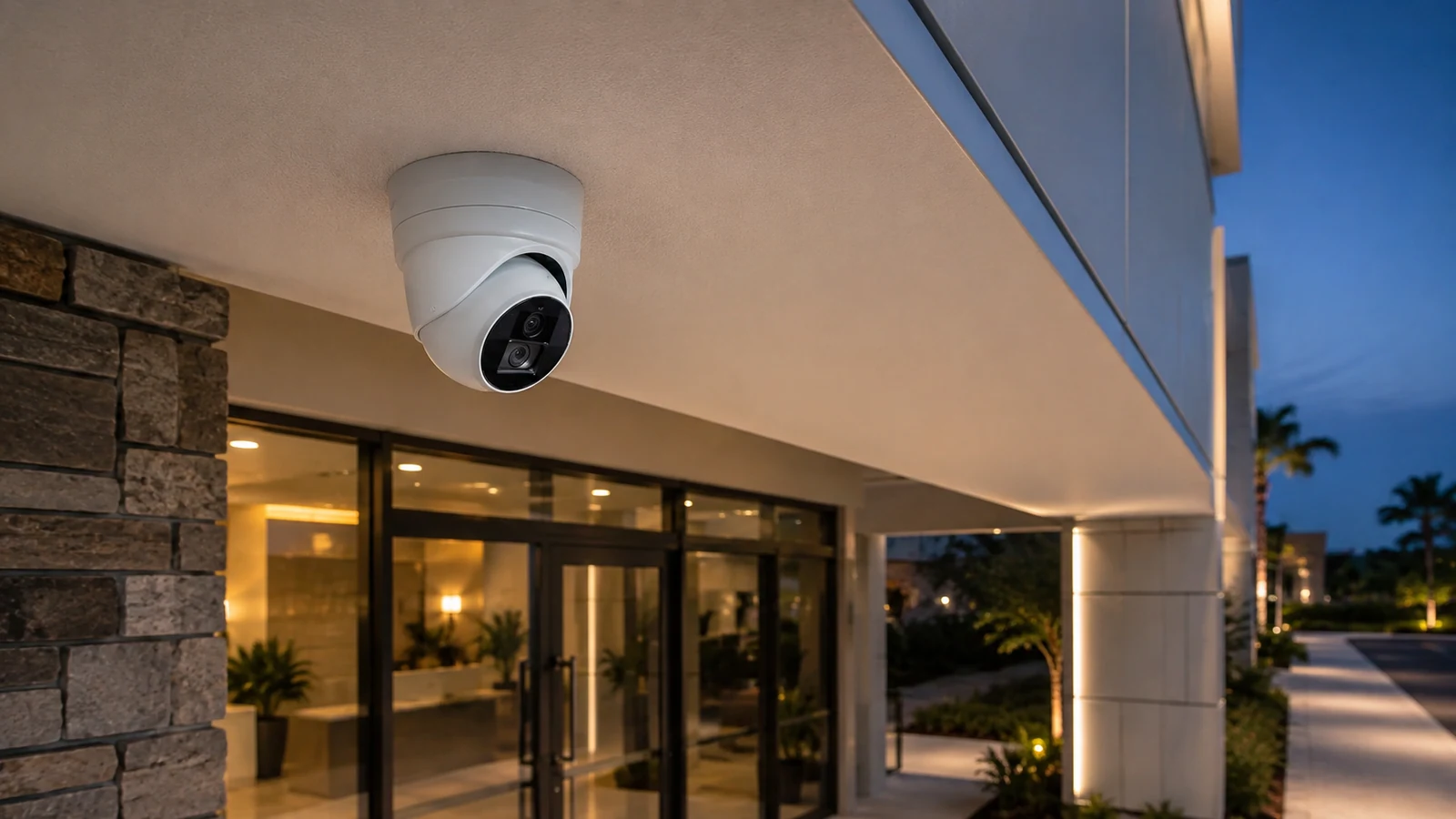
CAMERA SERVICE OPTIONS
Commercial camera projects do not all begin with the same decision. A new system, a network-native deployment, an analytics question, a recording problem, and an aging coax system each require a different starting point.
Ocala Security Cameras by Data Pro Communications organizes those needs into distinct service paths so property teams can reach the right conversation without turning the hub into a generic installation pitch.
Security Camera Installation begins with required views, site conditions, pathways, recording, and commissioning for a new commercial system.
IP Video addresses camera transport and network architecture; NVR & Remote Viewing addresses retention, playback, export, and authorized access.
Troubleshooting isolates faults, upgrades plan broader modernization, and Commercial CCTV evaluates analog, coax, hybrid, and migration conditions.
Data Pro Communications operates under FL License #EC13016138 and uses the approved Ocala branch contact information.
Different camera projects call for different types of work. A new system, an existing fault, a recorder or storage requirement, analytics tuning, and a legacy CCTV migration each begin with a different technical assessment.
A warehouse adding cameras to a new dock expansion presents a different problem from a farm replacing a failing DVR or a professional office trying to reduce nuisance analytics events. The correct service path begins with that difference.
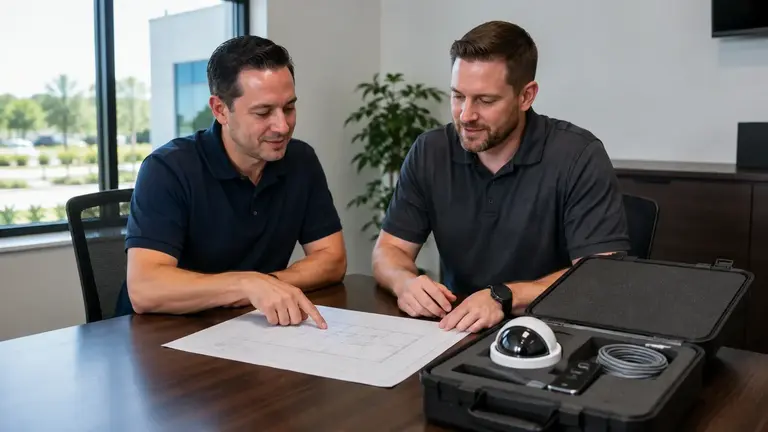
A request for additional coverage should not be handled like an intermittent-video diagnosis; the information and field work differ.
An IP camera network can be healthy while storage, playback, user permissions, or remote access still fails to meet the operating need.
A repair may restore a failed component, while an upgrade considers whether broader replacement or expansion is justified.
Coax condition, analog formats, hybrid recorders, and staged migration belong to CCTV modernization rather than a clean-sheet installation scope.
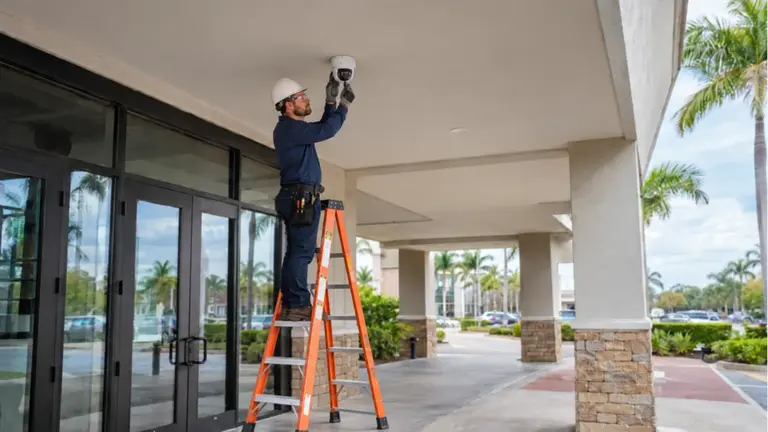
Plan a new commercial system from scene objectives through placement, infrastructure, recording, commissioning, and handoff.
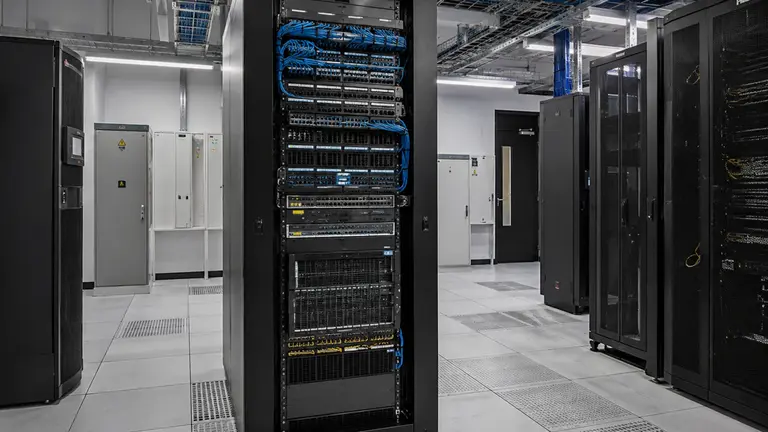
Develop network-native camera transport around PoE, switching, uplinks, bandwidth, and remote-building conditions.
Define useful events, qualify scenes, place detection zones, tune behavior, and review practical limitations.
Plan recorded evidence around retention, throughput, playback, export, accounts, and authorized off-site access.
Modernize or expand a working system through compatibility review, reuse decisions, phased replacement, and new coverage.
Trace a specific symptom through device, power, cabling, network, recorder, storage, configuration, and remote-access layers.
Evaluate analog, IP, or hybrid CCTV environments involving coax, DVR/NVR transitions, mixed generations, and staged migration.
New docks, aisles, yards, and entrances point to Security Camera Installation, with infrastructure defined around the required scenes.
Network-native cameras across barns, gatehouses, or remote poles may call for IP Video plus a separate fiber or outdoor-link solution.
Slow playback, insufficient retention, confusing exports, or uncontrolled accounts point toward the NVR and remote-viewing workflow.
Existing coax, older cameras, a legacy DVR, and selective reuse make Commercial CCTV the more useful starting point.
Camera types, recorder model, cabling, switches, power supplies, software, storage, and administrative access establish what already exists.
The property should identify which events need overview, recognition, identification, plate detail, search, export, or remote review.
Equipment rooms, detached structures, pathways, distances, gates, yards, and available uplinks affect which service must lead.
A new build, expansion, recurring fault, end-of-life recorder, retention gap, or operational analytics need points to a different service family.
Camera planning remains the starting point even when structured cabling, network infrastructure, fiber, outdoor wireless, access control, gate entry, or intercom affects delivery.
Supporting infrastructure is scoped according to the camera system's transport, power, entry, and communication requirements. The camera work stays centered on video while related technologies are addressed in their appropriate technical scopes.
Ocala and Marion County projects can range from professional offices and managed communities to distribution buildings, industrial yards, equestrian facilities, and multi-structure commercial properties. Their camera questions differ because operations, distances, lighting, and existing infrastructure differ.
A single-building retail installation may begin with entrances and checkout evidence. A training facility may need a separate discussion about gates, barns, outdoor links, remote viewing, and equipment locations before a camera-service path is selected.
Use Contact when the immediate need is to share property details, current equipment, timing, and the desired result.
Open the cabling solution when camera feasibility depends on new pathways, verified copper runs, patching, or equipment-room terminations.
Review the broader solution family when the project includes access, gate, intercom, fiber, outdoor links, or maintenance beyond the camera scope.
Warehouses, professional offices, managed communities, industrial yards, and equestrian facilities do not automatically need the same camera service. Existing equipment, network topology, evidence workflow, and the immediate project trigger determine the useful route.
State whether the project involves new coverage, an existing fault, modernization, recording, remote access, or analytics behavior.
List known cameras, recorders, cabling, network equipment, buildings, and administrative access without sending credentials.
Match the request to the technical assessment that fits the actual decision rather than the most familiar camera term.
Use a project conversation or survey to verify conditions and develop the service-specific scope.
Data Pro Communications provides the camera services represented by the Ocala branch and operates under FL License #EC13016138. The branch contact is 603 E Fort King St, Ocala, FL 34471, (352) 517-4404, and info@dataprocommunications.com.
Questions and answers
Security Camera Installation is the primary path for new commercial coverage. It connects site survey, scene objectives, camera placement, pathways, recording, commissioning, and handoff.
Commercial CCTV Installation is designed for analog, IP, or hybrid environments where coax condition, recorder compatibility, selective reuse, and staged migration need evaluation.
No. IP Video Surveillance focuses on camera endpoints, PoE, video transport, segmentation, and uplinks. Network Infrastructure covers broader switching, routing, wireless, and business connectivity beyond the video system.
NVR & Remote Viewing focuses on retention, throughput, storage, playback, export, permissions, and authorized remote access workflows.
Possibly. Camera capability, recorder or VMS support, scene geometry, lighting, image quality, and licensing must be reviewed before deciding whether existing devices can support the intended events.
Not automatically. Troubleshooting should first isolate whether the fault is in the device, power, cabling, switch, recorder, configuration, or remote-access path. An upgrade is considered when broader modernization is justified.
An upgrade fits when a working system needs planned improvement, such as additional coverage, new recording, higher resolution, analytics, remote access, or phased replacement.
Yes. The camera scope can define required views, while fiber, point-to-point wireless, gate entry, access control, or intercom may be coordinated through separate technical scopes.
No. Results depend on scene, placement, lighting, obstructions, system health, retention, settings, and the event itself. Analytics and plate capture also have specific geometry and environmental limits.
Describe the property, the current system, the problem or desired result, affected locations, and timing. Data Pro Communications can use that information to identify the most useful first review.
Use the service cards when the need is clear. When several symptoms or system generations overlap, share the property and current equipment so the first conversation can sort the path.