
Bushnell Property Context
Bushnell projects often involve county-seat, institutional, service-business or smaller operational properties where focused coverage and maintainable infrastructure matter more than scale.
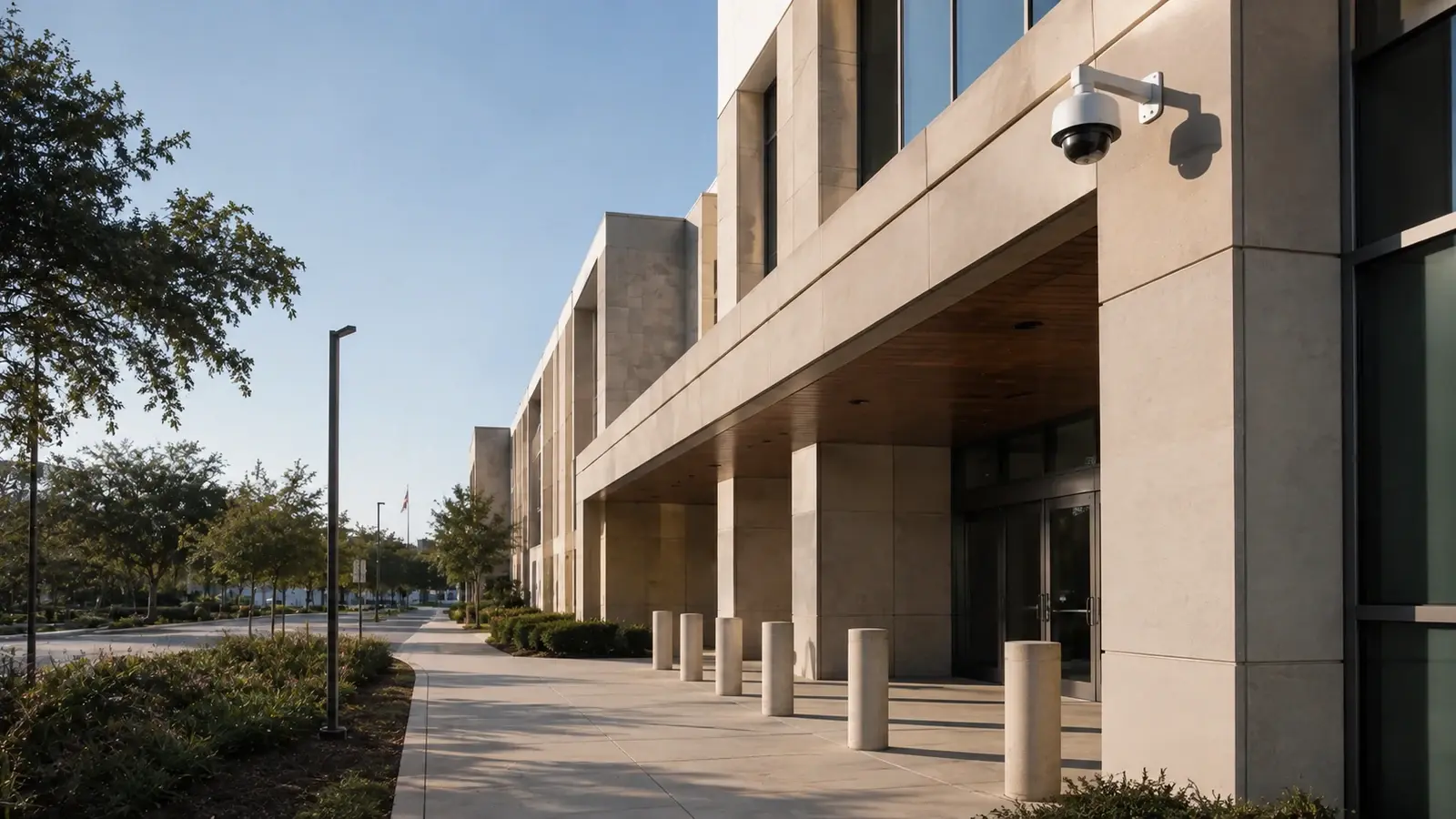
COMMERCIAL SYSTEM PLANNING FOR BUSHNELL PROPERTIES
Bushnell’s commercial scale is practical and concentrated. County-seat activity, schools, local utilities, service businesses and a limited set of industrial properties create real security needs, but the right scope is usually focused, maintainable and proportionate to the site.
Bushnell businesses and public-facing facilities often benefit from a focused plan built around a few important events: public entry, staff access, service-yard activity and after-hours vehicles. Data Pro Communications keeps the design proportionate to the property and straightforward for a smaller facility team to operate.
Bushnell projects often involve county-seat, institutional, service-business or smaller operational properties where focused coverage and maintainable infrastructure matter more than scale.
Bushnell coverage concentrates on public counters, staff-only access, service yards and after-hours parking in proportion to the facility’s actual scale.
School-adjacent administrative buildings require careful placement within the customer’s property boundaries, with cable and equipment kept in controlled operational areas.
Data Pro Communications provides project-specific low-voltage work under FL License #EC13016138 for qualifying Bushnell properties, including verified needs around utility and operations sites.
A Bushnell project may need clear courthouse-area public access, a school-adjacent administrative boundary, a small production floor, a utility facility or a roadside business with after-hours parking. The plan should solve the operating problem without assuming enterprise volume or unnecessary complexity.
Relevant properties include county-seat offices and public-facing facilities, local service businesses, school-adjacent administrative buildings, small manufacturing properties, utility and operations sites, and roadside commercial properties. Bushnell scopes favor maintainable equipment and clear operational priorities, avoiding unnecessary complexity while respecting public access and controlled work areas.
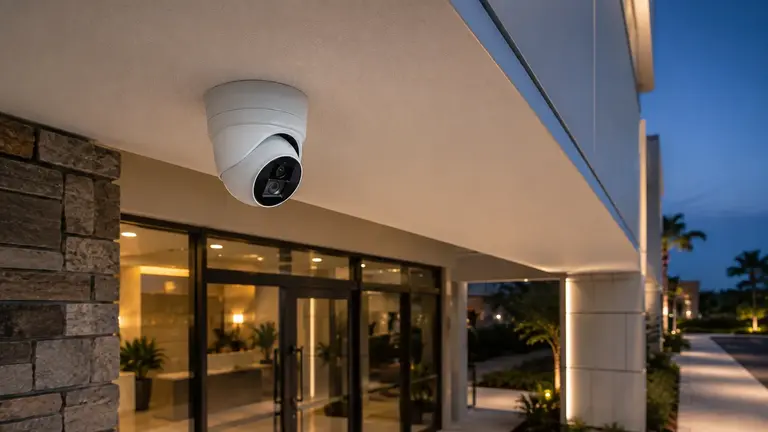
Government and institutional spaces need useful entry visibility without extending cameras into privacy-sensitive work areas.
Smaller organizations benefit from straightforward operation, clear labeling and remote access that does not depend on one employee.
An office, shop, yard and storage building may share one parcel but need different retention and coverage priorities.
The system should concentrate on decision-grade views and dependable infrastructure before adding low-value camera count.
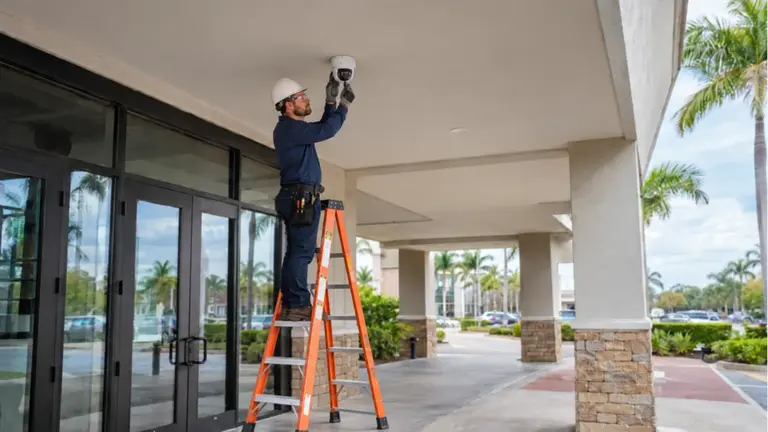
A public counter, employee doorway and small production area are assigned separate evidence goals that a modest staff can understand and use.
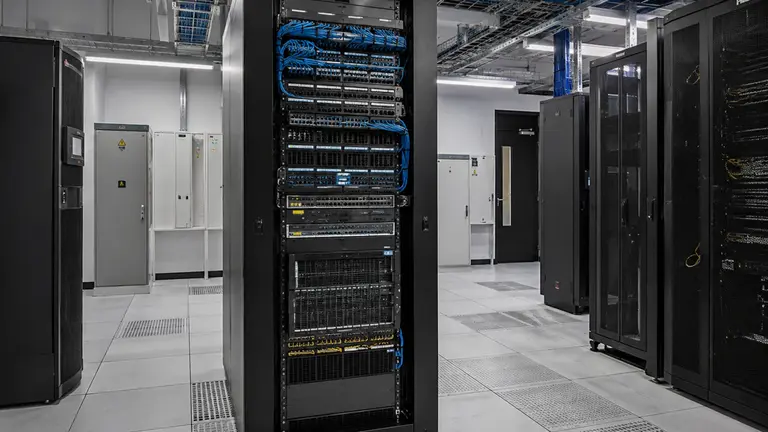
Local service businesses need retention that matches their review habits and recording hardware that fits existing network capacity without creating an outsized support burden.
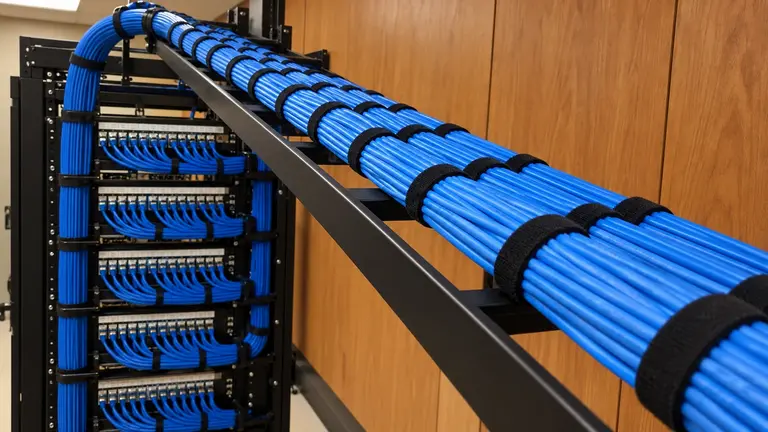
Bushnell cabling is kept straightforward, labeled and reachable so a smaller operations team can identify routes during future service.
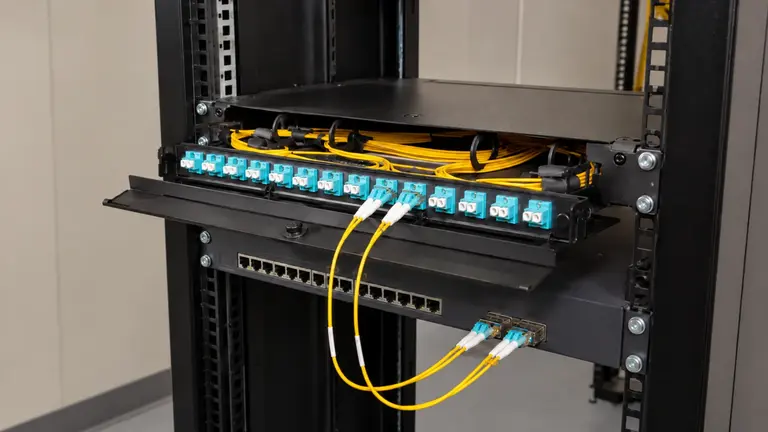
At a manufacturing property, switch load, secure recorder space and remote-account ownership are confirmed with the responsible business contact.
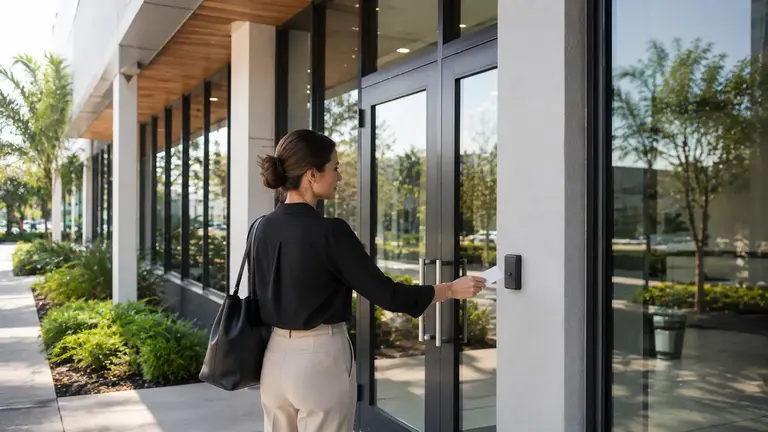
Administrative entry video can be associated with a controlled door only under the customer’s authority and within the approved access procedure.
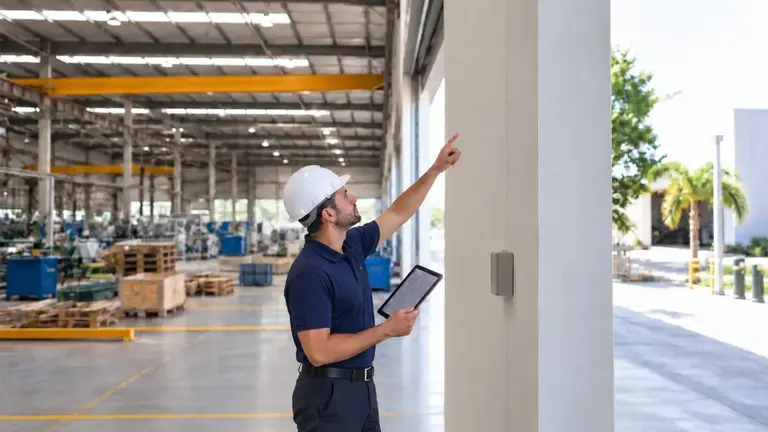
Existing Bushnell equipment is judged by whether it provides useful images and can still be administered safely; replacement is limited to components that fail those practical tests.
County-seat and public-facing views cover the facility’s own entrance and counter approach without implying surveillance of unrelated civic activity.
A service business can separate customer arrival, staff access and deliveries with a few deliberate views instead of broad, difficult-to-review coverage.
Small manufacturing exteriors are checked for task lighting, vibration, dust and a serviceable cable route before equipment is selected.
Utility or operations work is scheduled around essential access and any periods when staff can safely escort installers.
Administrative properties are measured from controlled telecom space to entrances and parking edges, using the simplest supportable connection for the distance.
Roadside businesses identify the person responsible for footage requests, user access and maintaining the final system record.
The Bushnell survey prioritizes the public threshold, staff boundary and service activity, then identifies who can approve power, network and mounting decisions at the compact facility.
Routes are kept direct where possible, with outdoor transitions and equipment locations documented before connectivity is chosen.
At an operations site, cameras are checked under working conditions, cabling is traced and administrator access is secured before equipment is accepted for reuse.
Installation and switchover are arranged around public hours, production activity or utility access according to the facility’s actual schedule.
Bushnell closeout proves each priority view and recording search, then leaves concise labels and documentation suitable for the customer’s designated operator.
A public-facing entry event may retrieve its corresponding image when the customer owns the door system and authorizes the workflow.
A local service counter can use intercom for a controlled arrival if the business assigns who answers and how entry decisions are made.
Administrative recording should operate from secured, maintainable equipment with a network connection appropriate to the facility’s scale.
Bushnell integration records name the business contacts responsible for cameras, network service, controlled entry and access to work areas.
Rank the few events that matter most—public entry, cash or records handling, service-yard access and after-hours vehicle activity—before laying out devices.
Keep the recorder, network cabinet and documentation simple enough for a small facility team to operate and service consistently.
Bushnell’s county-seat functions, service businesses and smaller operating sites call for a proportionate approach. A focused survey can prioritize public access, staff areas and service activity without overstating the size or complexity of the property.
Camera installation in Bushnell emphasizes a small set of useful views and a recording system the local operator can manage confidently.
Service-business footage is retained for the customer’s practical review period, with remote access limited to individual authorized users.
A focused upgrade can preserve serviceable cameras while replacing an unsupported recorder or insecure account arrangement.
Structured Cabling
Manufacturing pathways are labeled from production or exterior areas back to protected equipment without complicating future maintenance.
Network Infrastructure
Utility and operations networks are allocated for the approved system load and the remote sessions the customer actually expects.
Administrative-building credentials are managed by the customer’s authorized contact and limited to people with a defined access need.
Bushnell serves as the Sumter County seat at a smaller commercial scale. Nearby regional traffic does not change the practical, focused requirements of its civic, service and light-industrial sites.
Requests in the Bushnell area are reviewed from the exact address and the facility’s public, service or light-industrial role. Data Pro Communications considers staffing, restricted areas, existing network support and realistic operating hours when confirming the survey and service scope.
The site visit follows the public entrance into staff and service zones, then locates the modest infrastructure serving those priorities.
Bushnell view requirements come from practical events such as counter access, an after-hours vehicle or movement at a small production door, tested under the site’s real lighting.
The plan identifies who supplies access to routes and power, supports the network, decides existing-equipment reuse and sets workable installation periods.
After priority operations views and playback are verified, the customer’s designated contact receives labeled devices and a concise operating record.
Data Pro Communications serves commercial and professionally managed projects from the approved Ocala branch at 603 E Fort King St, Ocala, FL 34471. Call (352) 517-4404. FL License #EC13016138. License information is presented factually and does not replace project-specific permitting or compliance review.
Questions and answers
Start with the few events that create the most operational value: public entry, transactions, rear access, storage and after-hours vehicles. A compact, dependable system is preferable to unnecessary device count.
The design can provide entry and transaction context while avoiding private records, computer screens and restricted work areas. Exact boundaries are agreed with the facility owner.
Often they can if distance, bandwidth, power and network ownership support it. A detached shop or yard cabinet may need fiber or another designed link to the main equipment location.
List production access, material movement, employee doors, loading areas, hazards that limit mounting and the staff who manage the network. Cameras do not replace process or safety controls.
It can be, provided accounts are individual, permissions are limited and the business network is suitable. Shared passwords and unmanaged remote access should be avoided.
A phased hybrid approach may be possible when coax, power and devices are serviceable. The scope should document temporary limitations and the planned transition path.
Public entrances, administrative areas, staff access and delivery zones are scoped with the responsible organization. No customer relationship or school contract is implied by service-area coverage.
Only when a defined workflow and scene support them. Simple, clear recorded views may provide better value for a smaller facility than features that require ongoing tuning.
A labeled device list, equipment locations, authorized users, network responsibilities and configuration records reduce dependence on one employee and speed later troubleshooting.
The team schedules the agreed work, verifies installed views and system operation, and completes a practical handoff. Any change in scope is addressed before additional work is performed.
Start with the few operational events that matter most at your Bushnell property. A site survey can establish focused camera views, a maintainable recording and network design, and a project sequence that fits the site’s realistic scale.