
Summerfield Property Context
Summerfield properties are scattered rather than concentrated in a town center, so each parcel is reviewed as its own site with its own access points, utilities and network service.
COMMERCIAL SYSTEM PLANNING FOR SUMMERFIELD PROPERTIES
Summerfield is an unincorporated part of south Marion County, so its commercial activity is spread along highway frontage instead of gathered around a downtown. Businesses on the US 301 corridor, medical offices, managed communities, storage properties and gated parcels each start from a different planning position.
Projects in Summerfield are coordinated from the Ocala branch of Data Pro Communications. Each survey begins with the parcel itself: vehicle entry, telecom equipment, detached buildings or gates and who approves the work.
Summerfield properties are scattered rather than concentrated in a town center, so each parcel is reviewed as its own site with its own access points, utilities and network service.
Coverage goals are tied to specific events, such as a patient arriving at an office, a vehicle at a storage gate or a delivery at a rear door, instead of a request to watch the whole lot.
Wide parcels, detached buildings and long driveways are measured first to decide where copper is sufficient and where fiber optics or a field cabinet is needed.
Data Pro Communications provides project-specific low-voltage work under FL License #EC13016138 for qualifying Summerfield properties, including verified needs at managed communities and storage facilities.
Many Summerfield businesses serve the surrounding south Marion population, with customers arriving by car from US 301 and connecting county roads. Parking approaches, entry doors and after-hours vehicles are therefore central to most scopes.
Relevant properties include highway-frontage retail and service businesses, medical and professional offices, managed communities and HOA amenities, self-storage and light industrial properties, community facilities, and rural or large-acreage parcels with gates. Video surveillance, access control, structured cabling and business Wi-Fi are planned as one low-voltage systems integration effort, giving the owner a single record of what was installed and who controls it.
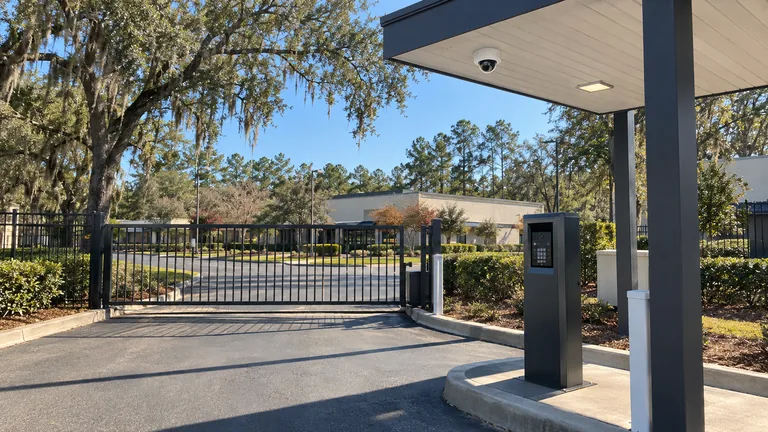
Storage rows, amenity buildings and outbuildings can sit well beyond the reach of a standard copper run from the main equipment room.
A managed community may involve a board, a management company and a gate vendor, each with a different role in approving and operating the system.
Storage sites, amenity buildings and offices are often unstaffed overnight or on weekends, so recording and remote review must work with no one on site.
Medical and professional offices need entrances and staff doors documented while exam rooms, records and workstation screens stay out of view.
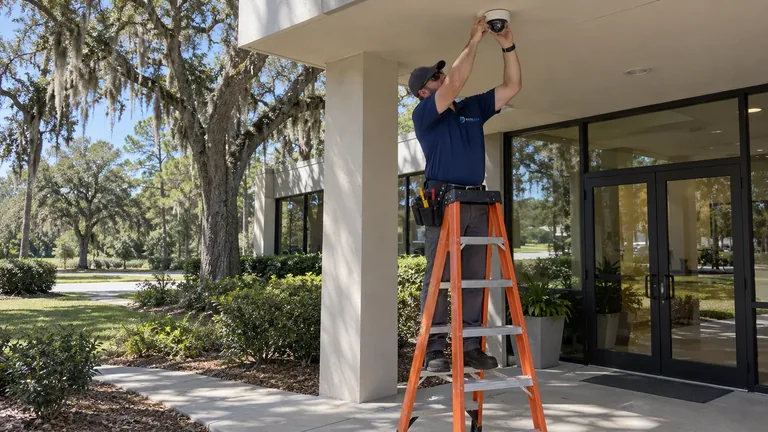
A storage keypad, a clubhouse entrance and an office lobby each receive a defined purpose, with lens and mounting height matched to the needed detail.
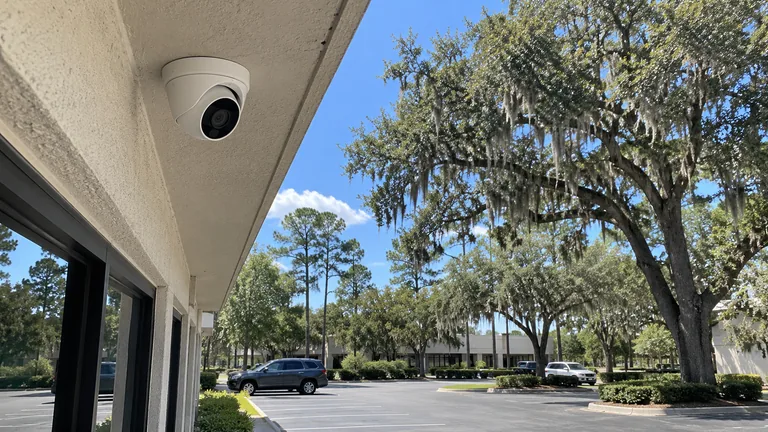
Summerfield recording is sized from camera count, unattended hours and how far back the manager typically searches, with the recorder in a protected, ventilated location.
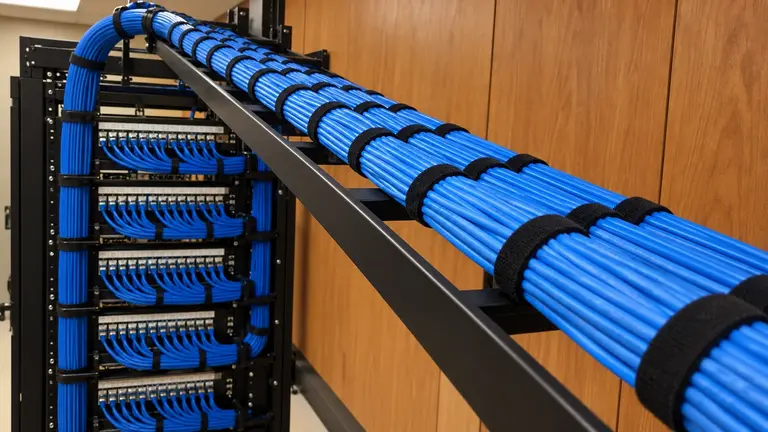
Category cabling in offices and amenity buildings is labeled at both ends and routed to an identified rack, while long exterior spans are flagged for fiber optics.
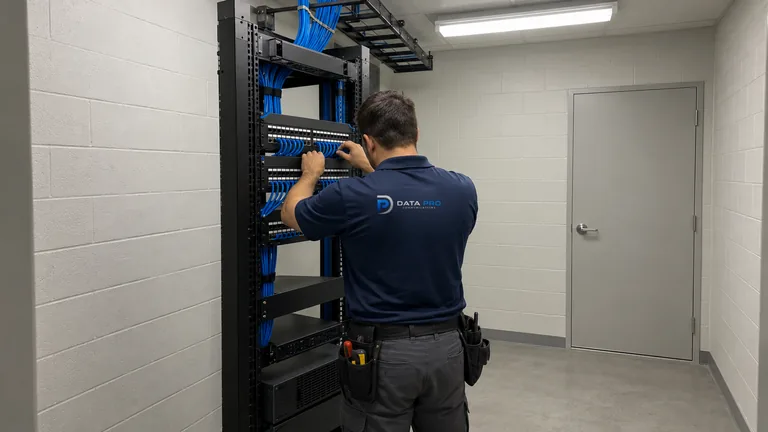
Camera traffic, PoE switching and business Wi-Fi are planned together so wireless use at a clubhouse or office does not compete with recording on an unmanaged network.
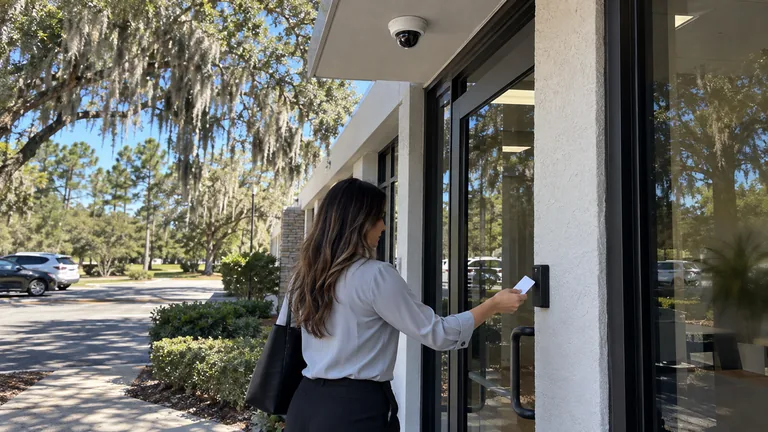
Gate, door and clubhouse access control can be linked to nearby cameras when the owner or association controls both systems and has approved how events are reviewed.
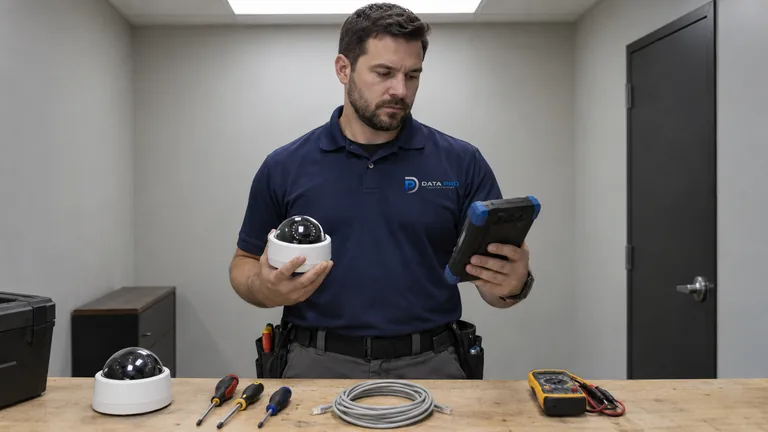
Standalone gate cameras and aging DVRs are tested in place; working components can stay, while unsupported recorders and shared logins are replaced.
Along US 301, coverage focuses on the business's own driveway, customer door and service entrance, keeping views off neighboring lots and the roadway.
Offices document arrivals, the reception threshold and staff-only doors, while exam rooms, records areas and screens remain outside the camera plan.
Coverage is limited to common spaces the board or management company authorizes, such as clubhouse entrances, pool gates and mail kiosks, under the association's footage policy.
Gates, drive aisles and loading doors are assigned to defined camera zones, and long rows of units are reached through planned pathways instead of improvised extensions.
Churches, clubs and community centers are scoped around entrance doors, parking and event schedules, with installation timed so programs and gatherings continue normally.
The entrance gate, a barn or equipment building and the main structure are treated as separate network points, often joined by fiber optics or an engineered wireless link.
The walk-through follows the customer or patient path from the road entrance to the door, then traces staff access and the telecom route.
Distances to gates, storage buildings and amenity structures are measured on site, and each run is assigned copper, fiber optics or wireless by length and exposure.
At a community or storage property, cameras, recorders, gate equipment and network devices are inventoried, tested and matched to an account owner before reuse.
Work is scheduled around patient hours, resident activities and gate traffic, with cutovers planned to limit recording gaps.
Summerfield closeout confirms each agreed view in daylight and after dark, demonstrates playback and export, and delivers a device list tied to network and access records.
A gate or door event at a storage facility or clubhouse can call up the matching camera view when the customer owns both systems and the link has been tested.
A video intercom at a community gate or office entrance works best when the customer defines who answers, during which hours and who may open the gate.
Multi-building recording depends on managed switching, surge protection on outdoor links and a layout that makes a failed connection easy to locate.
Integration records name who manages the internet service, gate equipment, access control database and camera system.
List the events that matter most, such as gate entries, after-hours vehicles, front-desk arrivals and rear deliveries, before choosing camera locations or counts.
On multi-building and large-acreage sites, decide early which structures connect by fiber optics, copper or wireless, and keep that decision in the project record.
Summerfield's mix of highway businesses, offices, managed communities and rural parcels rewards a parcel-by-parcel approach that measures distances, confirms decision-makers and documents existing equipment.
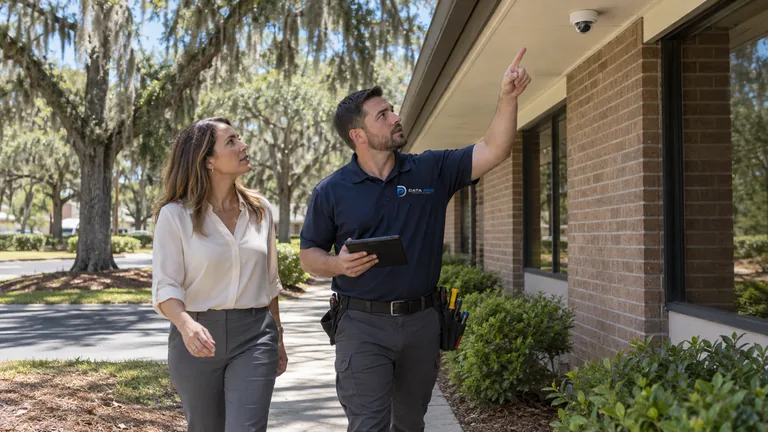
Summerfield camera installation turns gate, entrance and service-area priorities into fixed views, with lenses chosen for each distance.
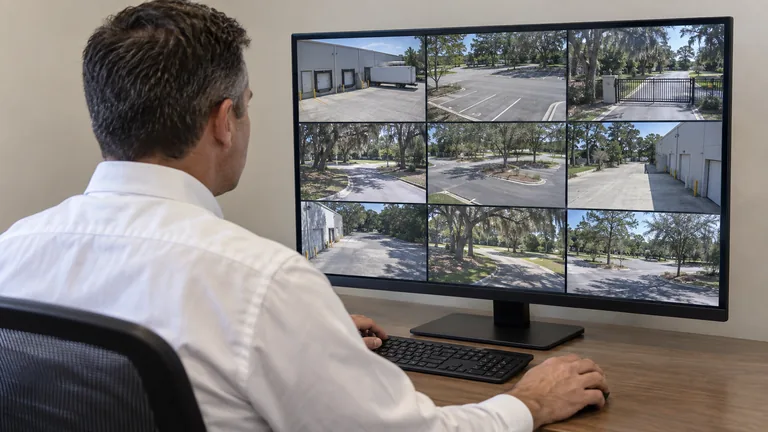
Managers of unattended properties receive individual remote accounts and a retention period matched to how incidents are usually reported.
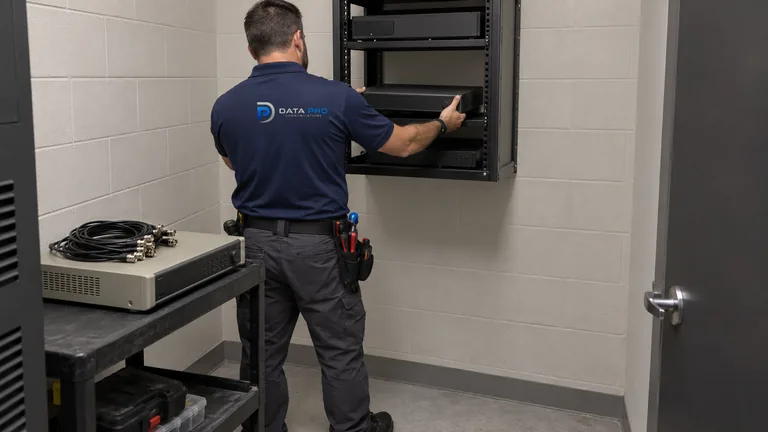
An upgrade can keep working cameras at a community or storage site while replacing an end-of-life recorder or failing outdoor connections.
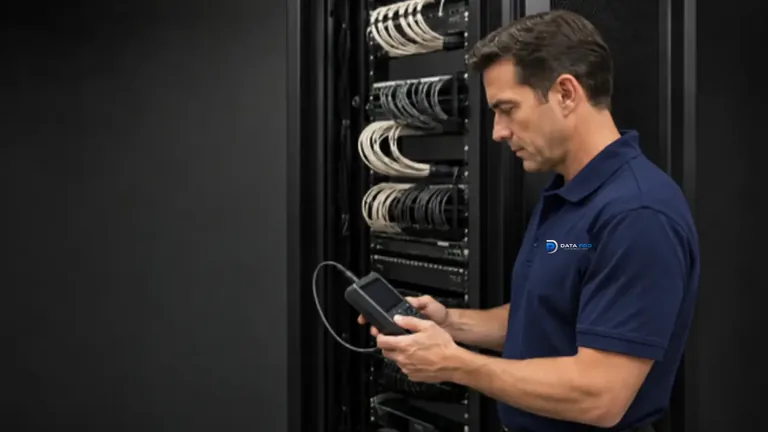
Structured Cabling
Office and amenity-building cabling is tested, labeled and documented to a defined rack, giving future additions a known starting point.
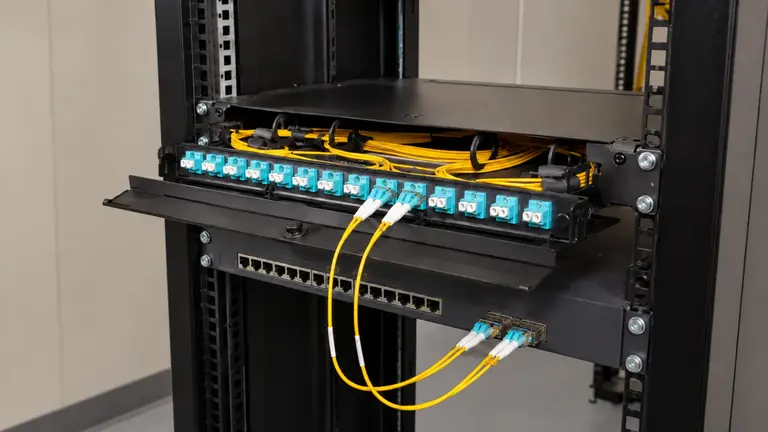
Network Infrastructure
Network work covers PoE switching, business Wi-Fi and fiber optic backbone links sized for the approved cameras and connected systems.
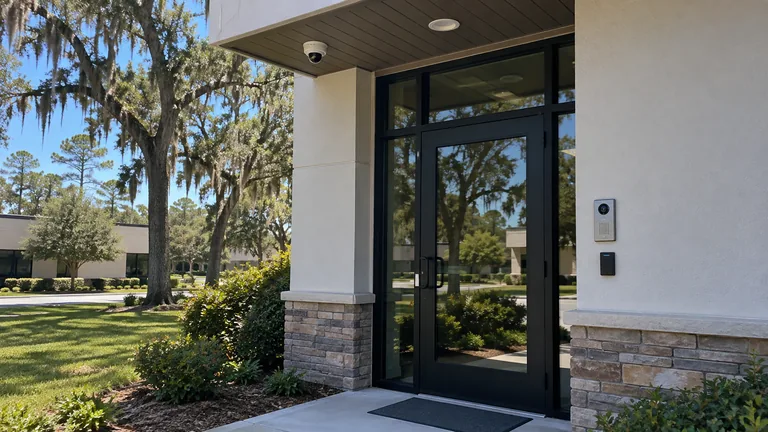
Door and gate credentials for offices, clubhouses and storage facilities are issued and revoked by the customer's authorized administrator.
Summerfield is an unincorporated community in south Marion County, south of Belleview on US 301, centered near the intersection of US 301 and County Road 475A. Commercial properties sit along US 301 and connecting county roads, alongside managed communities and larger rural parcels.
Unincorporated properties fall under Marion County rather than a city government and vary widely in size, so each request is reviewed from the street address and parcel layout, including gate access, network service and required approvals.
The site visit covers the road entrance, parking and gate areas, the main building and any detached structure that must join the system.
Views are built from events such as a vehicle at a storage keypad, a resident entering an amenity building or a patient arriving, then checked against real lighting.
The plan assigns power, trenching or conduit access, network service, association approvals, equipment reuse and installation windows.
After views, recording and connected functions are verified, the designated contact receives labeled devices, account details and a concise system record.
Data Pro Communications serves commercial and professionally managed projects from the approved Ocala branch at 603 E Fort King St, Suite 84, Ocala, FL 34471. Call (352) 517-4404. FL License #EC13016138. License information is presented factually and does not replace project-specific permitting or compliance review.
Questions and answers
Commercial and professionally managed properties: highway retail and service businesses, medical and professional offices, managed communities, storage and light industrial sites, community facilities and larger gated parcels.
Summerfield projects are coordinated from the Ocala branch, and surveys and installations take place at your property.
Priorities are the entry gate, office or kiosk, drive aisles and loading areas. Long rows of units may need intermediate network equipment or fiber optics.
Yes, when the board or management company approves the locations, retention and viewing permissions. Coverage stays in common areas, with a named contact handling footage requests.
The plan covers entrances, reception approaches, parking and staff doors while excluding exam rooms, records storage and screens. Boundaries are agreed with the practice before installation.
Fiber optics carries signals over long distances without electrical interference, which suits a buried run. Where trenching is impractical and the path is clear, a point-to-point wireless link may be designed instead.
Yes, when the network is designed for it, typically with managed switching and separate segments so recording, door controllers and Wi-Fi do not interfere with one another.
Retention depends on how quickly incidents are discovered, camera count and required image quality. Properties left unattended for long stretches often need longer retention.
Possibly. Devices are tested for image quality, supported firmware, intact wiring and recoverable administrator access, and anything that fails is documented for replacement.
The findings become a defined scope of views, cable and fiber routes, network equipment and customer responsibilities. Pricing and scheduling follow that approved scope.
Whether your Summerfield property is a highway storefront, a medical office, an amenity center, a storage facility or a gated parcel, a site survey can define the views, connections and network design it needs. Call (352) 517-4404 or request a site survey to get started.