
Silver Springs Property Context
Properties range from compact SR 40 frontage sites and visitor businesses to multi-acre parcels where gates, barns and storage buildings sit well apart from the main structure.
COMMERCIAL SYSTEM PLANNING FOR SILVER SPRINGS PROPERTIES
Silver Springs stretches east from Ocala along the SR 40 corridor toward the Ocala National Forest, mixing roadside businesses, visitor-oriented properties and rural parcels in unincorporated Marion County.
A Silver Springs project might be a storefront facing SR 40 traffic, a lodging property near Silver Springs State Park, a contractor yard or a gated parcel with barns and outbuildings. Data Pro Communications coordinates these projects from the Ocala branch, starting with entrances, gates, existing infrastructure and the distances between buildings.
Properties range from compact SR 40 frontage sites and visitor businesses to multi-acre parcels where gates, barns and storage buildings sit well apart from the main structure.
Silver Springs coverage separates guest or customer arrival, staff entry, gate traffic and after-hours vehicle movement so that each view answers a specific review question.
On large-acreage and equestrian parcels, the backbone to each outbuilding is planned first using fiber optics, protected copper or an engineered wireless link.
Data Pro Communications provides project-specific low-voltage work under FL License #EC13016138 for qualifying Silver Springs properties, from SR 40 businesses to rural and equestrian parcels.
A business on SR 40 deals with fast-moving traffic and wide lots, a visitor-oriented property sees arrivals at irregular hours, and a rural parcel may need coverage at a gate several hundred feet from the nearest network switch.
Relevant properties include SR 40 corridor businesses, visitor-oriented hospitality properties near Silver Springs State Park, retail and service businesses, churches and community properties, rural, large-acreage and equestrian properties, and light industrial or contractor sites. Designs add structured cabling, access control and business Wi-Fi to security cameras and video surveillance only where the property needs them.
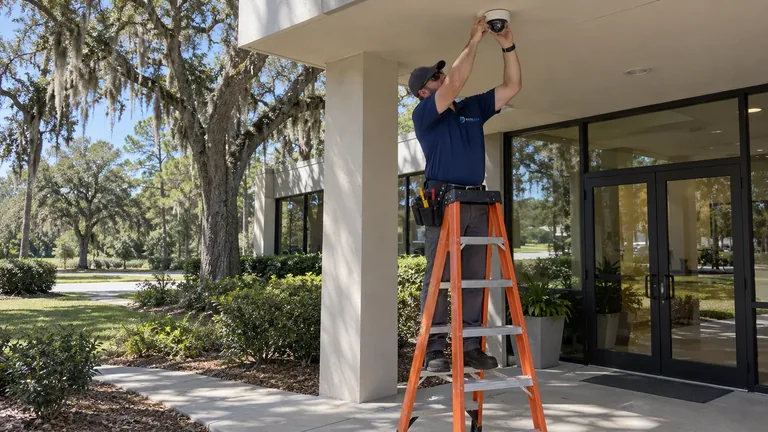
Headlights, signage and long setbacks along SR 40 can wash out entrance and parking views unless angles and lighting are planned together.
Guest check-ins, vendor deliveries and weekend activity at visitor-oriented properties do not follow a standard business schedule.
Barns, gatehouses, equipment sheds and storage buildings often sit beyond reliable copper distance from the main equipment location.
Shopping centers and multi-tenant properties need clear decisions about who owns the system, approves placement and manages footage requests.
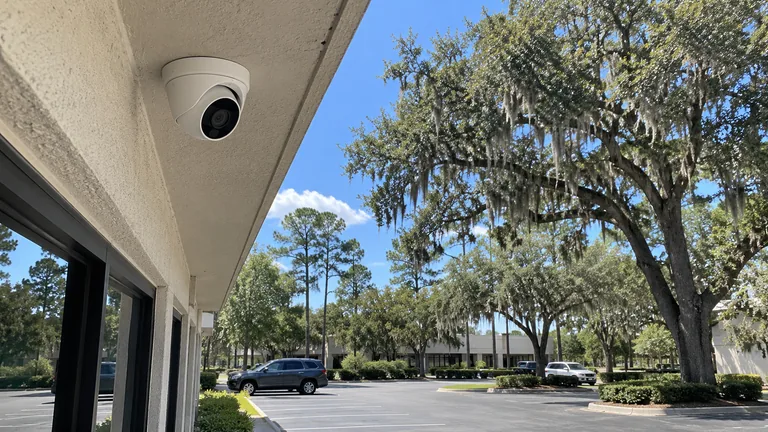
A lodging entrance, a shopping-center storefront and a ranch gate each receive their own detail and field-of-view goals rather than one generic camera layout.
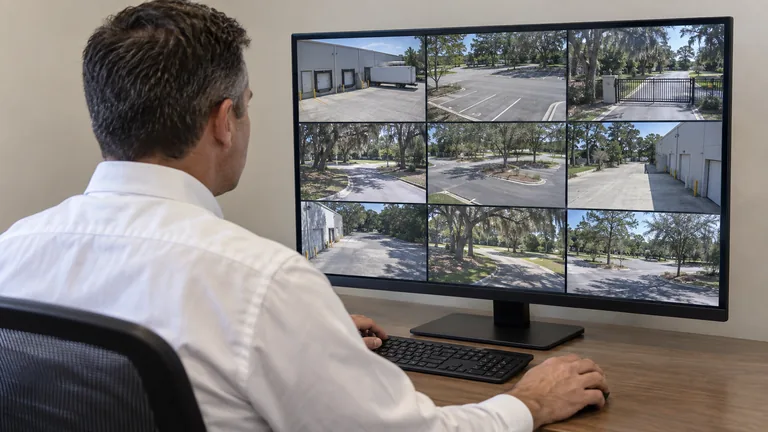
Retention is sized from camera count, operating hours and how often staff review footage, with recorders placed where they stay cool and secure.
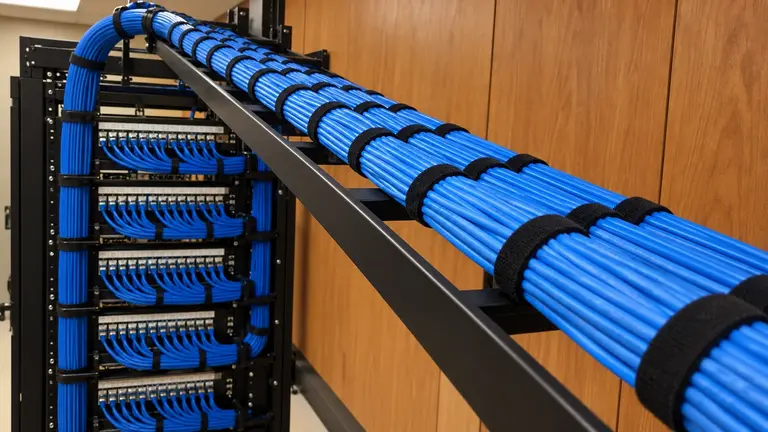
New cabling is labeled at both ends and routed through serviceable pathways so future additions start from a documented route.
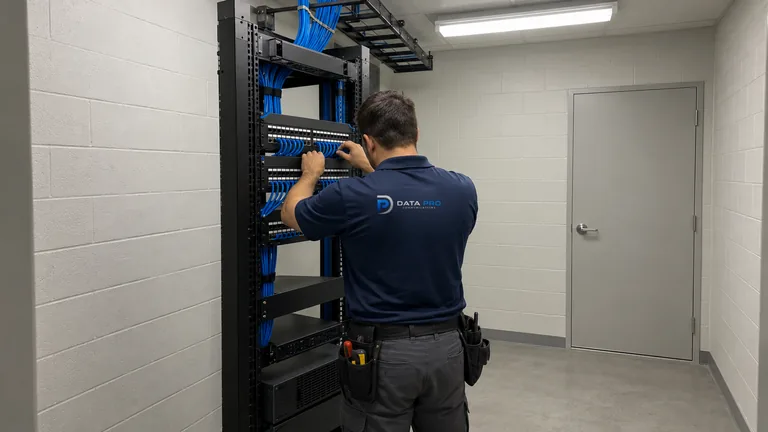
Camera traffic, PoE budgets and business Wi-Fi are reviewed together, with the customer's network owner confirming switch capacity and remote-access rules.
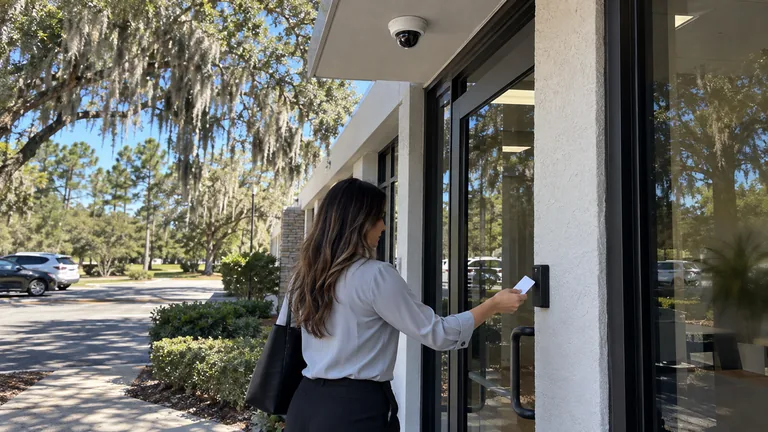
Gate and door events can be paired with video when the property controls its access control hardware and has an approved procedure for reviewing entries.
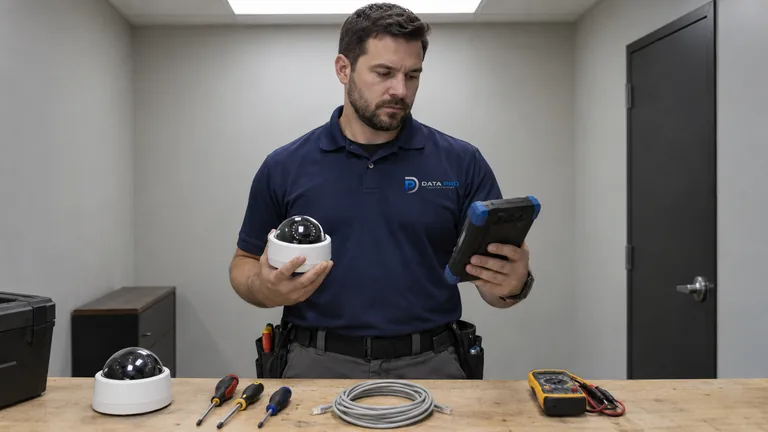
Older systems on corridor and rural properties are tested for image quality, cable condition and administrator access; the results determine what is kept, repaired or retired.
SR 40 storefronts and service businesses focus on the customer entrance, parking approach and rear access, with cameras angled away from roadway glare.
At lodging, dining and visitor businesses near Silver Springs State Park, views cover the property's own entrances, lobbies and parking, not public land.
Retail counters, service bays and delivery doors are assigned separate views so a transaction, a vehicle drop-off or a rear delivery can each be reviewed quickly.
Churches and community buildings along the SR 40 corridor are scoped around entrances, parking and event schedules, with placement approved by the people responsible for the property.
Gates, barns and equipment buildings connect through measured outdoor links, with power, grounding and enclosures confirmed at each point.
Yard entrances, material storage and loading areas receive coverage designed around vehicle movement, dust and the protected mounting points available on site.
The survey begins at the public entrance, follows guest or customer flow to service areas and identifies who controls each door and communications space.
Distances from the main building to gates, barns and detached structures are measured before choosing copper, fiber or wireless transport.
Existing cameras, recorders and cable are checked under real lighting, traced to their endpoints and confirmed for recoverable administrator access.
Installation is scheduled around guest activity, store hours, feeding and turnout routines or yard operations, depending on how the property actually runs.
Closeout in Silver Springs confirms each approved view and playback search, then leaves labeled devices and a concise record for the customer's designated contact.
A controlled gate or door can retrieve its matching video when the owner manages the access hardware and the link works reliably during testing.
An intercom at a hospitality entrance or ranch gate supports controlled arrivals once the property defines who answers and who can release entry.
Remote cameras depend on stable links back to the recorder, with field cabinets and network components placed where a technician can reach them.
Low-voltage systems integration records name the contacts responsible for cameras, the network, gate hardware and access to shared or outlying areas.
Rank the events that matter most, such as customer entry, guest arrival, gate traffic and after-hours vehicles, before placing devices.
Treat each detached barn, gatehouse or storage building as a small infrastructure point with confirmed power, enclosure, grounding and a path to the recorder.
Silver Springs combines corridor commerce, visitor-oriented properties and rural parcels east of Ocala. The survey determines which of those conditions apply to the property.
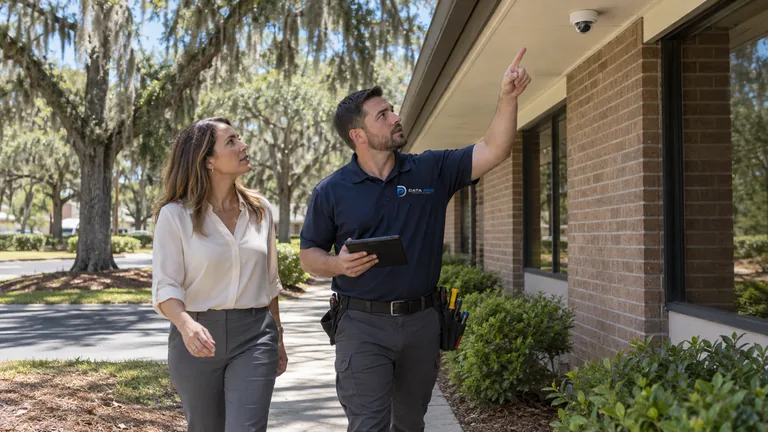
Camera installation in Silver Springs turns entry, gate and service-area concerns into deliberate views supported by a recording setup the business can manage.
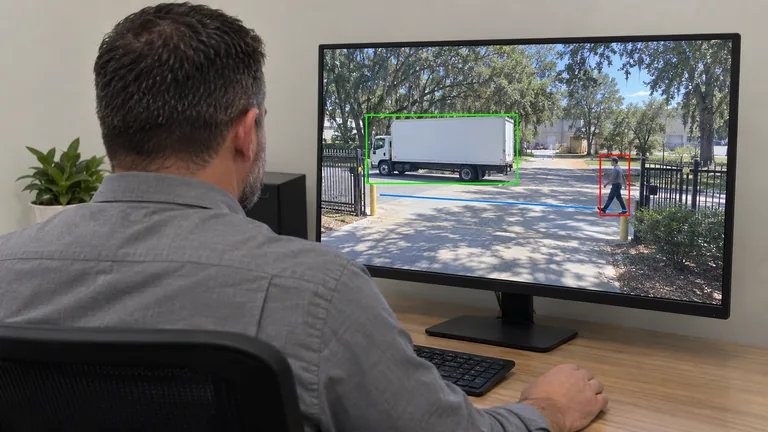
Hospitality and corridor businesses keep footage for their practical review period, with remote viewing limited to named users with individual credentials.
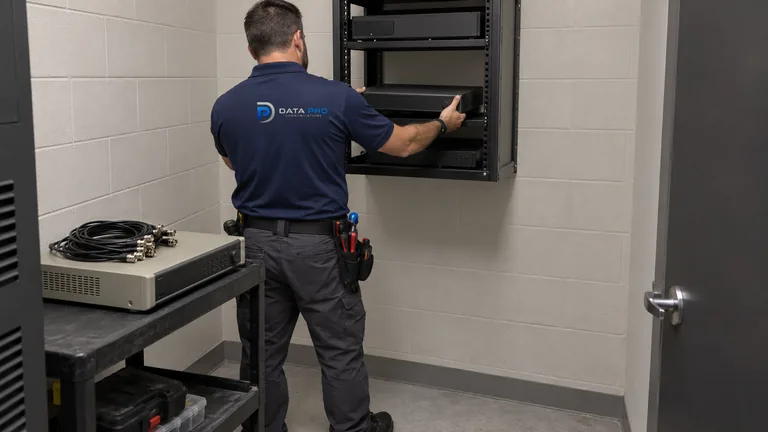
An upgrade can retain cameras that still produce usable images while replacing an unsupported recorder, failing cable or insecure shared login.
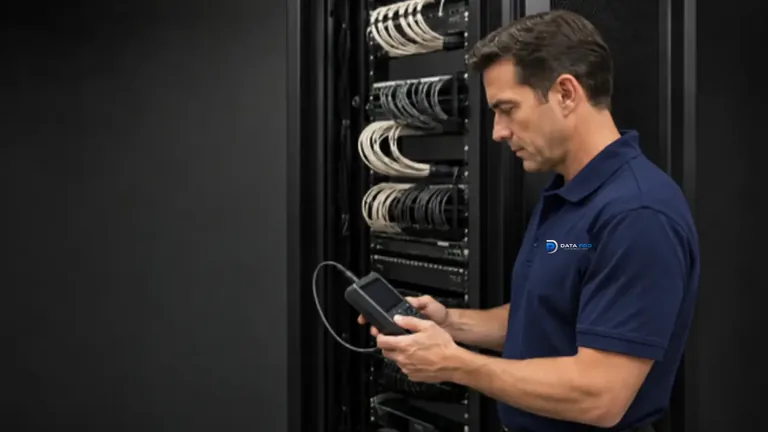
Structured Cabling
Cabling on multi-building properties is documented from each exterior zone or outbuilding back to the correct communications location.
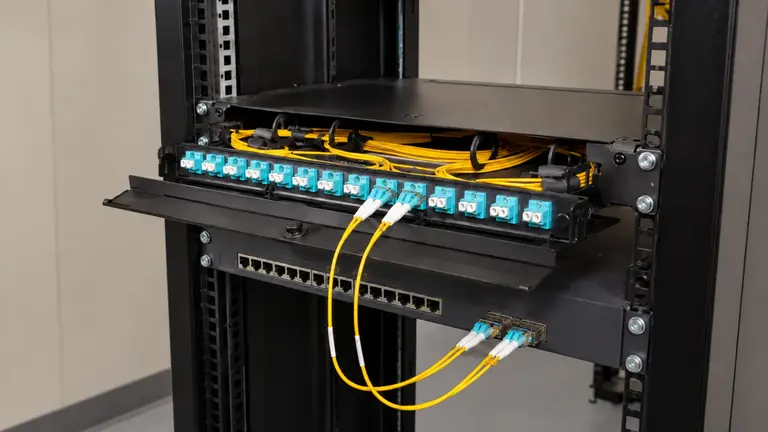
Network Infrastructure
Networks are sized for the approved camera load, business Wi-Fi and any fiber backbone to outlying structures, rather than a generic allowance.
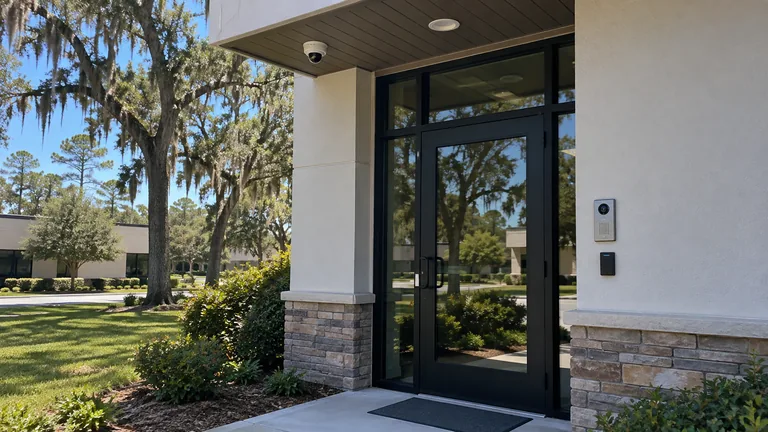
Gate and door credentials for shopping centers or rural properties are issued by the customer's authorized contact and removed when access is no longer needed.
Silver Springs is an unincorporated community in Marion County, centered on the SR 40 corridor east of Ocala and home to Silver Springs State Park. Properties in Silver Springs Shores, southeast of Ocala, have their own page. Both areas are served from the Ocala branch.
Each request is reviewed from the exact address and the property's role. Data Pro Communications considers road access, detached structures, existing network equipment and owner or management approvals when confirming the survey scope.
The site walk follows the public or guest entrance through service areas, then out to gates, barns or storage buildings that need to join the system.
View requirements come from real Silver Springs events, such as a guest arriving after dark, a vehicle at a ranch gate or a delivery behind an SR 40 storefront.
The plan assigns responsibility for pathway access, remote power, network support, reuse decisions and installation windows that fit the property's operations.
After each priority view and recording search is verified, the customer's designated contact receives labeled devices, account details and a clear system record.
Data Pro Communications serves commercial and professionally managed projects from the approved Ocala branch at 603 E Fort King St, Suite 84, Ocala, FL 34471. Call (352) 517-4404. FL License #EC13016138. License information is presented factually and does not replace project-specific permitting or compliance review.
Questions and answers
Yes. Silver Springs Shores, southeast of Ocala along Maricamp Road, has its own page, and properties there are coordinated from the Ocala branch just like those on the SR 40 corridor.
The survey checks setbacks, sign lighting and vehicle approach angles, then positions entrance and parking views so headlights do not overwhelm the needed detail.
Yes. Coverage focuses on the property's own entrances, lobby, parking and service areas, planned around guest arrivals after dark.
The owner or property manager approves camera locations for shared parking and common areas, while each tenant decides on coverage inside its own space. Recorder ownership and footage requests are assigned before installation.
It depends on distance, terrain, conduit, power and line of sight. Fiber optics often suits long runs, while engineered wireless may fit a clear path where trenching is impractical.
Often, if the equipment still performs. Each device, cable run and recorder is tested for image quality, supported firmware and recoverable access before reuse is accepted.
Not always. Wi-Fi is added when staff, offices or outbuildings need it, and it is designed alongside camera traffic so the two do not compete.
When the customer owns both systems and documents the entry procedure, gate events can be paired with video. Credentials remain under the customer's control.
Work is divided into zones and timed around check-in periods, business hours, feeding routines or yard activity, with cutovers planned to limit downtime.
The designated contact receives verified views, recording access, labeled devices and documented responsibilities. The handoff reflects the approved scope, so your team knows exactly what was installed and who manages it.
Whether your property faces SR 40, welcomes visitors near the springs or spans acreage with gates and outbuildings east of Ocala, start with a site survey. Data Pro Communications will define the views, cabling, network and integration choices that fit the site.