
Fort McCoy Property Context
Fort McCoy parcels are often large and wooded, so each gate, barn, shop or storage building is reviewed as its own point with its own power, mounting and network needs.
RURAL AND COMMERCIAL SYSTEM PLANNING FOR FORT MCCOY PROPERTIES
Fort McCoy is an unincorporated community in northeast Marion County, west of the Ocala National Forest and north of Silver Springs. Its properties are mostly rural: wooded acreage, horse and cattle parcels, equipment storage and small businesses and community buildings along County Road 316.
On a Fort McCoy property, the gate may be hidden by trees, the nearest building with power may be far away and internet service varies from parcel to parcel. Data Pro Communications plans these projects from the Ocala branch and designs the connections first, so every camera has a reliable path to recording.
Fort McCoy parcels are often large and wooded, so each gate, barn, shop or storage building is reviewed as its own point with its own power, mounting and network needs.
Coverage focuses on what the owner needs to know, such as which vehicle came through the gate, who entered a storage building or what moved near equipment after dark.
Trees and distance shape the design: fiber optics or protected copper is used where trenching is practical, and wireless links only where a clear line of sight can be confirmed.
Data Pro Communications provides project-specific low-voltage work under FL License #EC13016138 for qualifying Fort McCoy properties, including rural gates, farm buildings and commercial sites along County Road 316.
Many Fort McCoy properties are reached by long private drives through woods or pasture. Tree cover blocks wireless paths that would work on open land, and power is not always available where a camera is needed, so the survey confirms both before equipment is selected.
Relevant properties include wooded acreage and rural gates, horse and cattle properties, equipment and storage buildings, small businesses on County Road 316, churches and community buildings, and homes on large rural parcels. Data Pro Communications is a DoorKing Authorized Partner and also installs LiftMaster gate operators and 2N video intercoms for properties that need controlled entry.
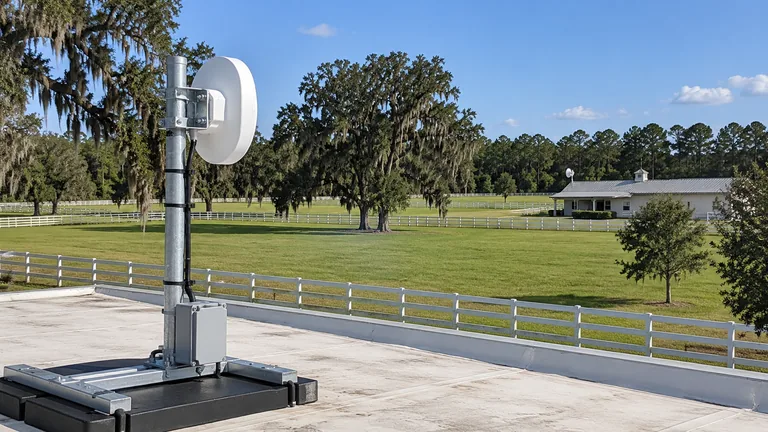
Oaks and pines can block line of sight for wireless links and shade camera views, so paths and angles are confirmed on site rather than from a map.
Gates and outbuildings may sit far from any power source, which affects whether a location can be reached by cable, PoE or a separate circuit.
Upload speed differs from parcel to parcel, which sets how much remote viewing the property can support while recording stays on site.
Insects, animals, heat and storms affect enclosures, cable protection and surge protection on every outdoor run.
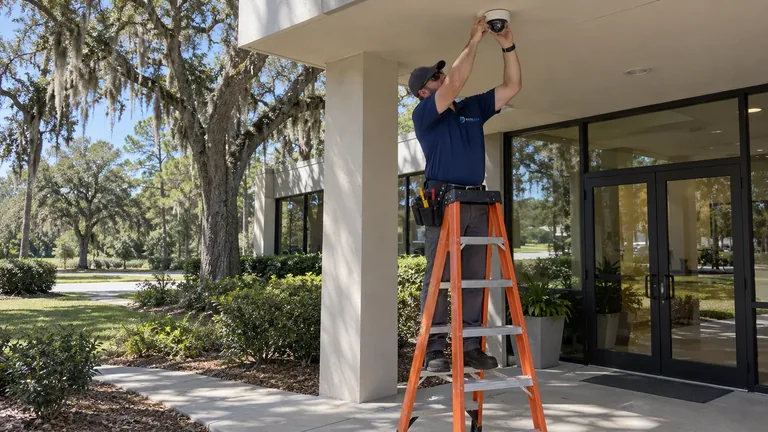
A wooded gate, a pole barn and a storage container each receive a defined purpose, with lenses and night performance matched to distance and available light.
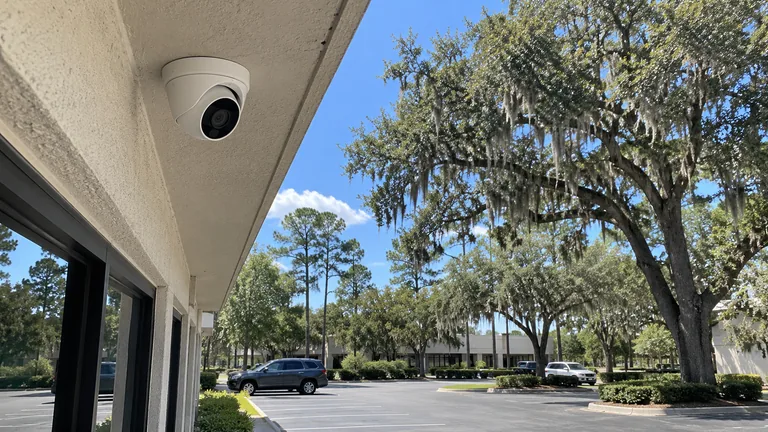
Recording is kept on site and sized from camera count, unattended periods and how far back the owner searches, so footage is available even when the internet connection is down.
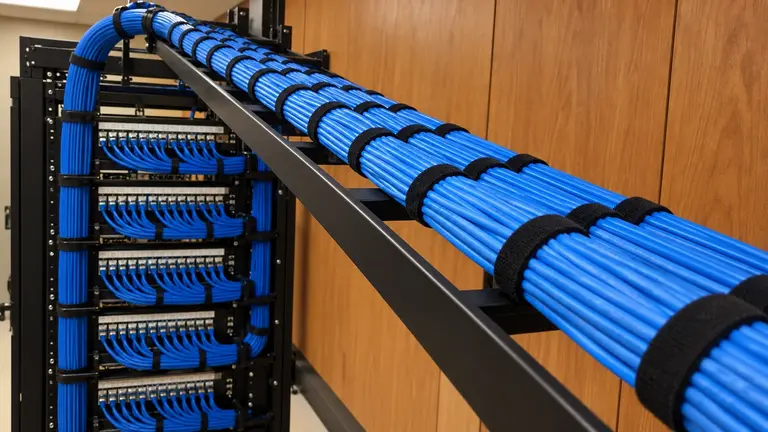
Cable inside shops and barns is protected from animals and moisture, labeled at both ends and brought to one documented equipment location.
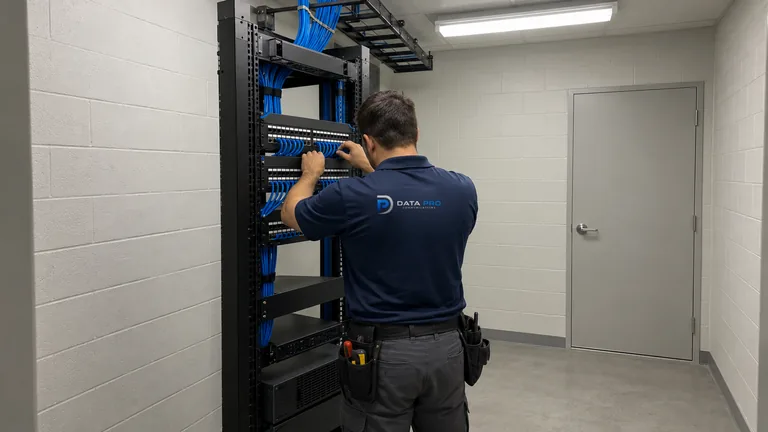
The network is planned around the connection the property actually has, with outdoor switches, PoE budgets and remote access sized to that service.
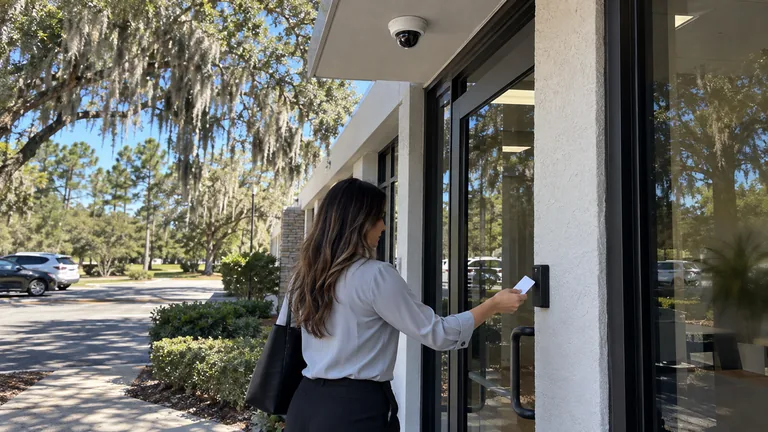
Gate operators, keypads and video intercoms can be linked to the entrance camera when the owner controls the gate and has decided who may open it.
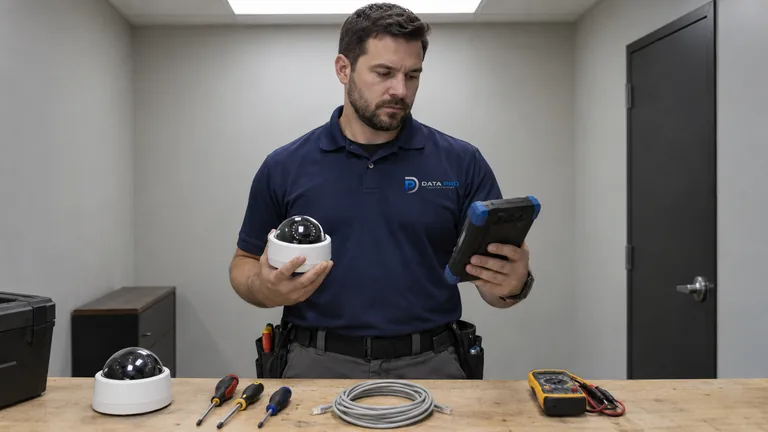
Existing trail cameras, standalone recorders and wireless bridges are tested for image quality, reliability and access before any of them is kept.
Rural gates receive a vehicle-identification view and an overview of the drive, with power and the network path confirmed through the trees.
Barns, pens and pasture gates are covered from protected mounting points, planned around the routes animals, staff and vehicles take each day.
Shops, pole barns and storage buildings receive door and yard views focused on after-hours access to equipment and fuel.
Businesses along County Road 316 focus on the driveway, customer door and rear access, with recording that keeps working through internet interruptions.
Community buildings are scoped around entrances, parking and event schedules, with locations approved by the people responsible for the building.
Homes on large parcels are planned with the same commercial approach: gate, drive, house and outbuildings each receive defined coverage and a documented link.
The Fort McCoy survey starts at the road gate, follows the drive through the property and records tree cover, power, mounting points and the location of the internet service.
Distances and trench routes from each gate and building are measured, and wireless paths are checked for clear line of sight before any link is proposed.
Existing cameras, recorders, wireless bridges and gate equipment are tested in place and assigned to an owner account before reuse is considered.
Work is scheduled around animal care, hunting or land-management activity and weather, with outdoor runs completed in dry conditions.
Fort McCoy closeout includes a night check at the gate and each building, a test of recording with the internet disconnected and a walkthrough of search and export with the owner.
A gate opening or keypad entry can bring up the matching video when the owner manages both the gate system and the cameras and the link has been tested.
A video intercom at a rural gate lets the owner see and speak with a visitor before opening, once the property decides who answers and when.
Outdoor links need surge protection, grounding and weather-rated enclosures, with equipment placed where a technician can reach it without heavy equipment.
Fort McCoy records note the internet provider and account holder, who administers the gate and cameras and where each outdoor link and power point is located.
Confirm the internet service at the property early, because it decides how much remote viewing is practical while recording stays on site.
Walk every proposed wireless path in person; on wooded Fort McCoy parcels, a buried fiber or copper run is often more dependable than a link through trees.
Fort McCoy properties combine distance, tree cover and variable service. Designing the connections before choosing cameras produces a system that keeps recording through storms and outages.
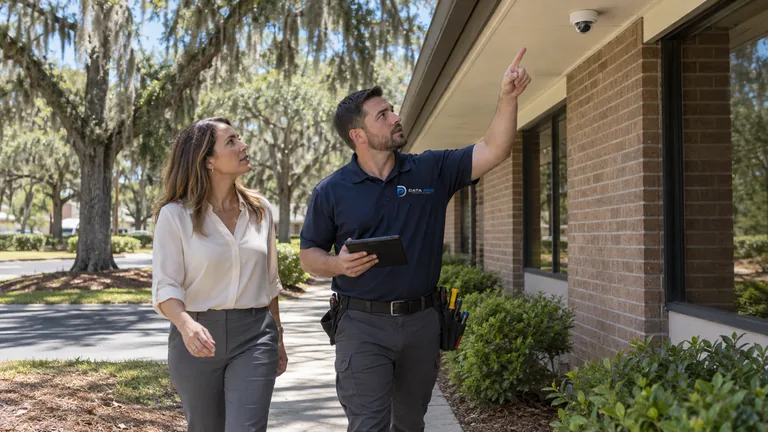
Fort McCoy camera installation turns gate, building and yard priorities into fixed views, with night performance matched to each location.
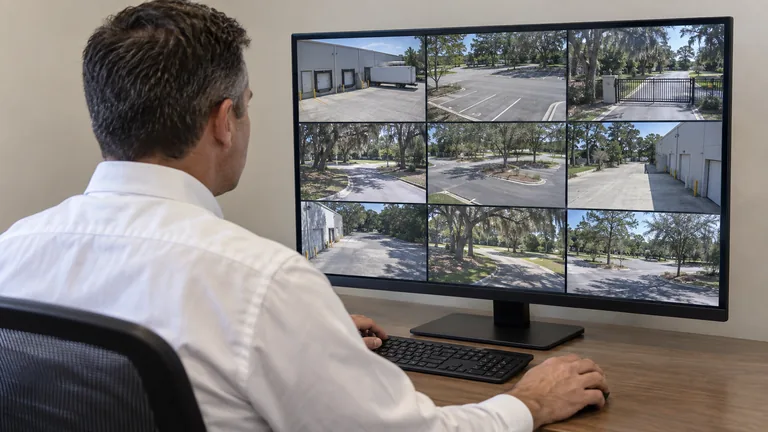
Remote viewing is configured for the upload speed the property actually has, with individual accounts for each person who needs access.
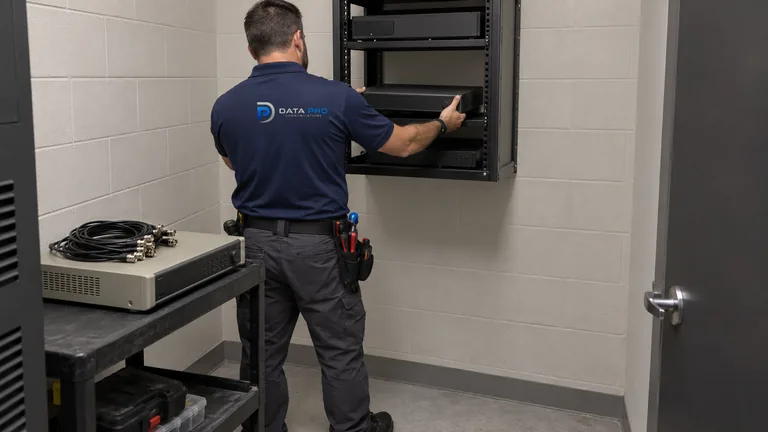
An upgrade can keep working cameras while replacing an unreliable wireless bridge, a weathered connector or an outdated standalone recorder.
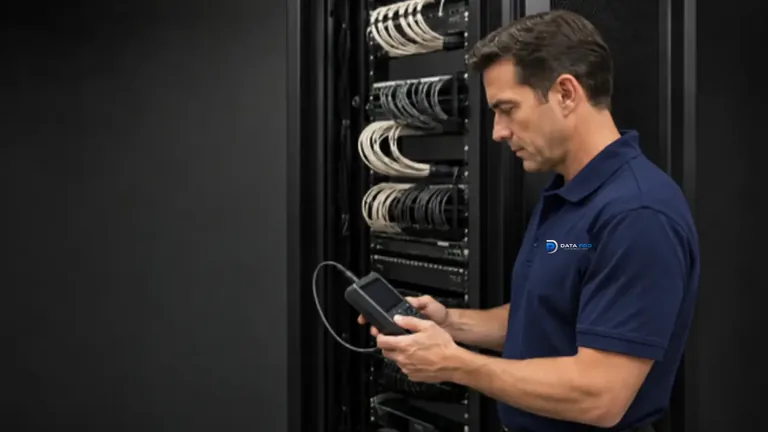
Structured Cabling
Inside Fort McCoy shops and pole barns, cable is kept off the floor and away from animals and rodents, then tested and labeled to one equipment point.
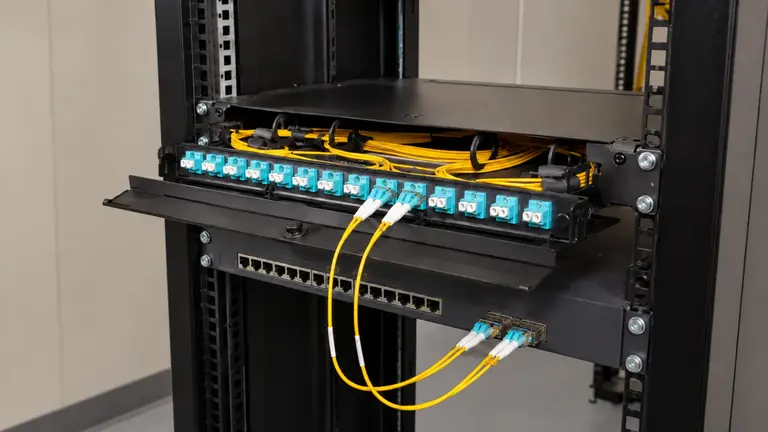
Network Infrastructure
Network work covers outdoor switches in protected enclosures, PoE at each building and the fiber, copper or wireless backbone that ties the parcel together.
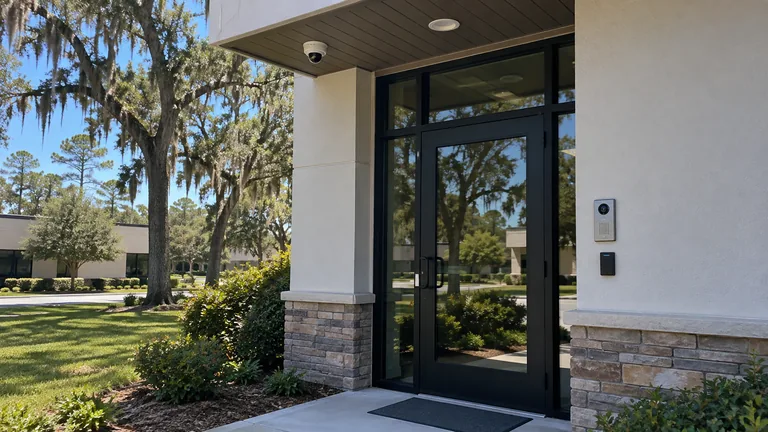
Gate codes for family, workers and contractors are kept in separate groups that the owner can change or remove at any time.
Fort McCoy is an unincorporated community in Marion County, northeast of Ocala and part of the Ocala metropolitan area. It lies west of the Ocala National Forest and directly north of Silver Springs, with County Road 316 running through the community and County Road 315 leading south toward Silver Springs. Projects in Fort McCoy are served from the Ocala branch.
Unincorporated properties fall under Marion County, and parcel sizes vary widely. Each request is reviewed from the address and layout, including gates, tree cover, power at remote structures and the internet service available.
The site walk follows the drive from the road gate to each building and area that needs coverage, noting tree cover, power and network at every stop.
Views are defined from real events, such as a vehicle at the gate after dark, a door opening at a storage building or movement near parked equipment.
The plan assigns trench or wireless paths, power at remote locations, gate equipment, reuse decisions and installation windows around weather and property activity.
After night views at the gate and buildings are confirmed, the owner receives user accounts, a map of each camera and link and remote viewing set for the property's connection.
Data Pro Communications serves commercial and professionally managed projects from the approved Ocala branch at 603 E Fort King St, Suite 84, Ocala, FL 34471. Call (352) 517-4404. FL License #EC13016138. License information is presented factually and does not replace project-specific permitting or compliance review.
Questions and answers
Yes. Rural acreage, farms, storage buildings and businesses in Fort McCoy are planned from the Ocala branch, starting with a site survey of the gate, drive and buildings.
Point-to-point wireless needs clear line of sight. Each path is checked on site; where trees block it, a buried fiber or copper run is usually more dependable.
Recording stays on site, so cameras keep recording without the internet. Remote viewing is configured for the upload speed available, which is checked during the survey.
Yes. A video intercom at the gate can call the owner's phone or the house, so a visitor can be seen and heard before the gate is released. On wooded parcels, the intercom's path to the house is planned together with the gate camera.
Options depend on the location. Some gates can be reached with PoE over the data cable; others need a new circuit by a licensed electrician before cameras or gate equipment are installed.
Night performance depends on distance, available light and the camera chosen. Views are tested after dark at closeout, and supplemental lighting is recommended where it is needed.
Possibly. Each device is tested for image quality, reliability and administrator access. Consumer trail cameras are usually not suitable as part of a recorded commercial system.
Outdoor runs are designed with surge protection and grounding, and fiber optics is often recommended for long runs because it does not carry electrical surges between buildings.
Yes. Shops, offices and community buildings along County Road 316 are planned with the same survey-first approach, scheduled around business hours.
Your survey becomes a written plan of camera views, gate equipment, each cable or wireless path through the property and the items the owner provides; pricing and scheduling follow from it.
If your Fort McCoy property sits behind a wooded gate, depends on a long drive or keeps equipment far from the house, a site survey will show how to connect and cover it. Call (352) 517-4404 or request a site survey to get started.